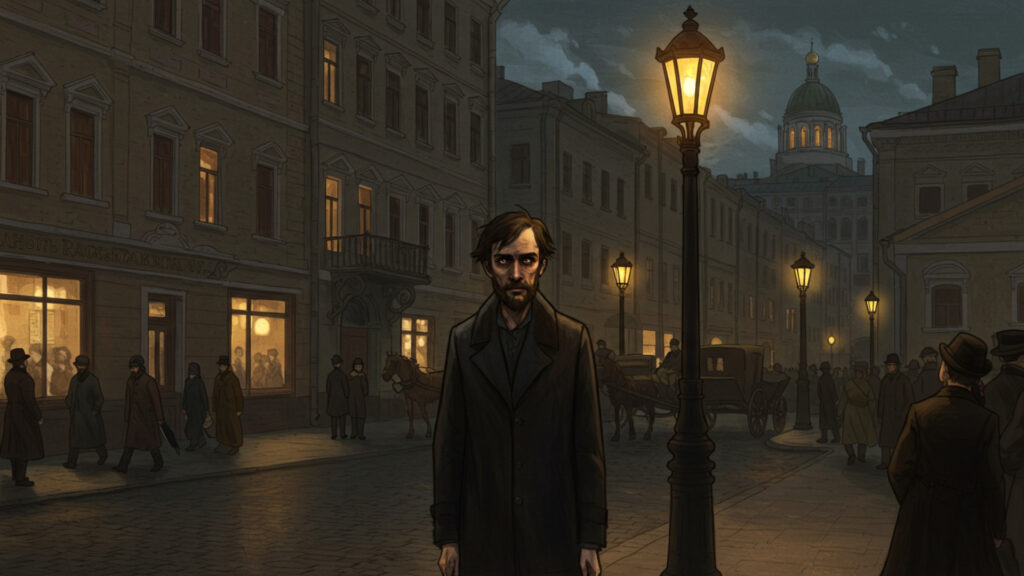
죄와 벌: 왕초보
도스토옙스키의 걸작, ‘죄와 벌’ 영상에 오신 것을 환영합니다! 👏 이 영상은 복잡하고 깊이 있는 도스토옙스키의 세계로 들어가는 첫걸음을 위한 안내서입니다.
도스토옙스키 소개
러시아 문학의 거장이자, 인간 심리의 가장 어두운 면까지 파고든 소설가입니다. 그의 작품은 단순히 이야기를 넘어, 인간 존재의 본질적인 질문, 도덕적 딜레마, 그리고 구원의 의미를 탐구합니다. 그는 인간의 고뇌와 영혼의 갈등을 집요하고도 생생하게 그려내는 데 탁월한 재능을 보였습니다.

‘죄와 벌’ 소개
1866년 발표된 이 작품은 대학생 라스콜니코프의 이야기입니다. 그는 가난과 사회의 부조리 속에서 자신만의 ‘초인 이론’을 바탕으로 한 살인을 계획하고 실행합니다. 하지만 범죄 후 찾아오는 것은 그가 예상했던 자유가 아니라, 상상할 수 없는 정신적 고통과 죄책감의 미로였습니다.
이 소설은 ‘살인을 하면 어떻게 되는가?’라는 단순한 질문에서 시작하지만, 곧 우리 모두가 마주하는 보편적인 질문들을 던집니다. ‘과연 어떤 범죄도 정당화될 수 있는가?’, ‘인간에게는 도덕적 한계를 넘을 권리가 있는가?’
원문 듣기
Hello, lovely Shoong Sshoong Channel viewers! And a special welcome to all our amazing 왕초보 English learners! Welcome.
Have you ever wondered how a book can change you? Not just tell you a story, but truly make you feel new things and think new thoughts? Today, we're going on a special journey. It's a journey into a very famous book called Crime and Punishment. Don't worry, we won't just tell you what happens. We will help you feel what it's like to read it, to live with its characters, and to understand its big ideas.
A Story of a Young Man and a Big Secret
Imagine a young man, Raskolnikov. He is smart, but he is also very poor. He lives in a small room in a big city. He has a secret, a very dark secret. He thinks about it all the time. He believes he is special, that he can do something bad for a good reason. But is that true? Can a bad act ever be good?
This book takes us inside his mind. We walk with him on the streets. We feel his fear. We feel his worry. He tries to hide his secret. He tries to act normal. But it's very hard. His secret is like a heavy stone in his heart. It makes him sick. It makes him sad.
The Weight of Guilt: A Journey Inside
When we read Crime and Punishment, we don't just read about a crime. We read about the feeling of guilt. It's a powerful feeling. It can make you feel alone. It can make you feel lost. Raskolnikov feels this more and more each day. He wants to escape it, but he cannot. Guilt follows him everywhere.
Think about a time you did something wrong. Maybe it was small. Did you feel bad? Did you want to make it right? Raskolnikov's feeling is much, much bigger. It is a constant whisper in his ear. It is a heavy weight on his shoulders. He tries to push it away, but it always comes back. This book shows us how strong this feeling can be. It shows us that true punishment is not just what others do to you, but what you do to yourself.
Friends, Family, and Finding the Way
Raskolnikov is not alone, even with his big secret. He has a kind mother and a loving sister. They care for him. They worry about him. He also meets other people. Some are good, some are not. There is a clever detective who watches him closely. There is a kind woman, Sonya, who helps people in need.
Sonya is very important in this story. She is poor, but she has a big heart and a strong belief. She shows Raskolnikov another way. She shows him that love and kindness can be stronger than any secret. She shows him that forgiveness is possible, but it must start from inside himself. Through Sonya, we learn about hope and redemption. It’s not about escaping punishment, but about finding a way to be good again.
Big Questions for You
Crime and Punishment asks big questions. Questions that people have asked for hundreds of years.
- Can one person decide what is right and wrong for everyone?
- What is true justice? Is it just laws, or is it something more?
- Can a bad person change? Can they find a way to be good again?
These questions are not just for Raskolnikov. They are for all of us. As you read this book, or even just think about its ideas, you will start to ask these questions yourself. You will think about what you believe. You will think about how we treat each other.
Why This Book Still Matters Today
Even though Crime and Punishment was written a long time ago, its message is still important. We all make choices. Sometimes we make good choices, sometimes we make bad ones. This book helps us think about the reasons behind our actions. It helps us understand that our choices have consequences. Not just for us, but for the people around us.
It also reminds us that everyone is human. Even people who make big mistakes. It teaches us about empathy, about trying to understand how others feel. It shows us that even in dark times, there can be light and hope. It shows us the power of confession and the importance of forgiveness. These are timeless ideas that can help us in our own lives, every single day.
Closing the Book, Opening Your Mind
When you finish Crime and Punishment, you won't just close a book. You will feel like you've been on a long journey. You will feel like you've walked beside Raskolnikov, felt his pain, and witnessed his struggles. You will have a new understanding of guilt, justice, and the power of the human spirit.
You might still have questions. That's good! Great books don't give all the answers. They make you think. They make you wonder. They open your mind to new ideas. This book will stay with you long after you've read the last page. It will make you think about your own choices and your own beliefs.
Thank you for joining me on this special journey into Crime and Punishment. I hope you feel like you've experienced a piece of this amazing story. Maybe it will inspire you to read the book yourself, or to think more deeply about the big questions it asks.
Until next time, keep reading, keep learning, and keep exploring the wonderful world of stories! See you soon, Shoong Sshoong Channel family!
주요 어휘
왕초보 단계 주요 어휘 (Vocabulary)
- change: (동사) 변화시키다, 변하다 (유의어: alter; 반의어: stay)
- feel: (동사) 느끼다
- think: (동사) 생각하다
- journey: (명사) 여행
- famous: (형용사) 유명한 (유의어: well-known; 반의어: unknown)
- crime: (명사) 범죄
- punishment: (명사) 처벌
- worry: (동사) 걱정하다; (명사) 걱정
- secret: (명사) 비밀
- good: (형용사) 좋은 (유의어: kind; 반의어: bad)
- bad: (형용사) 나쁜 (유의어: wrong; 반의어: good)
- mind: (명사) 마음, 정신
- fear: (명사) 두려움
- hide: (동사) 숨기다 (반의어: show)
- normal: (형용사) 평범한 (반의어: special)
- heavy: (형용사) 무거운 (반의어: light)
- sick: (형용사) 아픈
- sad: (형용사) 슬픈 (반의어: happy)
- guilt: (명사) 죄책감
- powerful: (형용사) 강력한 (유의어: strong; 반의어: weak)
- alone: (형용사) 혼자인 (유의어: solitary)
- lost: (형용사) 길을 잃은, 혼란스러운
- escape: (동사) 벗어나다, 탈출하다
- follow: (동사) 따라가다
- wrong: (형용사) 잘못된 (반의어: right)
- right: (형용사) 옳은 (반의어: wrong)
- constant: (형용사) 끊임없는 (유의어: continuous)
- whisper: (명사) 속삭임; (동사) 속삭이다
- shoulder: (명사) 어깨
- push: (동사) 밀다 (반의어: pull)
- come back: (동사) 돌아오다
- true: (형용사) 진정한, 사실인 (반의어: false)
- mother: (명사) 어머니
- sister: (명사) 여동생
- care: (동사) 돌보다
- meet: (동사) 만나다
- clever: (형용사) 영리한 (유의어: smart)
- detective: (명사) 형사
- watch: (동사) 지켜보다
- kind: (형용사) 친절한 (유의어: nice; 반의어: unkind)
- help: (동사) 돕다
- need: (명사) 필요; (동사) 필요하다
- important: (형용사) 중요한 (반의어: unimportant)
- heart: (명사) 마음, 심장
- belief: (명사) 믿음
- show: (동사) 보여주다
- love: (명사) 사랑; (동사) 사랑하다
- kindness: (명사) 친절
- stronger: (형용사) 더 강한 (strong의 비교급)
- forgiveness: (명사) 용서
- possible: (형용사) 가능한 (반의어: impossible)
- start: (동사) 시작하다 (반의어: end)
- inside: (부사/전치사) ~안에
- hope: (명사) 희망
- redemption: (명사) 구원
- again: (부사) 다시
- justice: (명사) 정의
- laws: (명사) 법률 (law의 복수형)
- everyone: (대명사) 모든 사람
- choice: (명사) 선택
- action: (명사) 행동
- consequence: (명사) 결과
- human: (형용사) 인간의; (명사) 인간
- mistake: (명사) 실수
- empathy: (명사) 공감
- understand: (동사) 이해하다
- feel: (동사) 느끼다
- dark: (형용사) 어두운 (반의어: light)
- light: (명사) 빛 (반의어: dark)
- confession: (명사) 고백
- timeless: (형용사) 시대를 초월한
- long journey: (명사) 긴 여행
- pain: (명사) 고통
- witness: (동사) 목격하다
- struggle: (명사) 고군분투; (동사) 고군분투하다
- spirit: (명사) 정신
- wonder: (동사) 궁금해하다
- open: (동사) 열다 (반의어: close)
- stay: (동사) 머무르다
- inspire: (동사) 영감을 주다
- deeply: (부사) 깊이
- explore: (동사) 탐험하다
- wonderful: (형용사) 멋진 (유의어: amazing)
문장 해석
Hello, lovely Shoong Sshoong Channel viewers!
안녕하세요, 사랑스러운 슝쓩 채널 시청자 여러분!
And a special welcome to all our amazing 왕초보 English learners! Welcome.
그리고 멋진 왕초보 영어 학습자 여러분 모두에게 특별히 환영합니다! 환영해요.
Have you ever wondered how a book can change you? 책이 여러분을 어떻게 변화시킬 수 있는지 궁금해 본 적이 있나요?
- wonder: (동사) 궁금해하다
- book: (명사) 책
- can: (조동사) ~할 수 있다
- change: (동사) 변화시키다, 변하다
Not just tell you a story, but truly make you feel new things and think new thoughts? 단지 이야기를 들려주는 것이 아니라, 정말로 새로운 것을 느끼게 하고 새로운 생각을 하게 만드는 것 말이에요?
- tell: (동사) 말하다, 이야기하다
- story: (명사) 이야기
- truly: (부사) 정말로, 진정으로
- make: (동사) 만들다
- feel: (동사) 느끼다
- new: (형용사) 새로운
- thing: (명사) 것, 사물
- think: (동사) 생각하다
- thought: (명사) 생각
Today, we're going on a special journey. 오늘, 우리는 특별한 여행을 떠날 거예요.
- today: (명사/부사) 오늘
- go on: (구동사) ~에 가다, ~을 떠나다
- special: (형용사) 특별한
- journey: (명사) 여행
It's a journey into a very famous book called Crime and Punishment. 그것은 **'죄와 벌'**이라는 아주 유명한 책 속으로의 여행입니다.
- very: (부사) 매우
- famous: (형용사) 유명한
- called: (과거분사) ~라고 불리는
- crime: (명사) 범죄
- punishment: (명사) 처벌
Don't worry, we won't just tell you what happens. 걱정 마세요, 우리는 단지 무슨 일이 일어나는지 이야기하지 않을 거예요.
- worry: (동사) 걱정하다
- just: (부사) 단지, 그저
- happen: (동사) 일어나다, 발생하다
We will help you feel what it's like to read it, to live with its characters, and to understand its big ideas. 우리는 여러분이 이 책을 읽는 것이 어떤 느낌인지, 등장인물들과 함께 살아보는 것이 어떤지, 그리고 그 큰 생각들을 이해하는 데 도움을 줄 거예요.
- help: (동사) 돕다
- like: (전치사) ~와 같은
- read: (동사) 읽다
- live: (동사) 살다
- character: (명사) 등장인물
- understand: (동사) 이해하다
- big: (형용사) 큰
- idea: (명사) 생각, 아이디어
Imagine a young man, Raskolnikov. 한 젊은 남자, 라스콜니코프를 상상해 보세요.
- imagine: (동사) 상상하다
- young: (형용사) 젊은
- man: (명사) 남자
He is smart, but he is also very poor. 그는 똑똑하지만, 또한 매우 가난합니다.
- smart: (형용사) 똑똑한
- also: (부사) 또한
- poor: (형용사) 가난한
He lives in a small room in a big city. 그는 큰 도시의 작은 방에 살아요.
- small: (형용사) 작은
- room: (명사) 방
- city: (명사) 도시
He has a secret, a very dark secret. 그는 비밀을 가지고 있어요, 아주 어두운 비밀을요.
- secret: (명사) 비밀
- dark: (형용사) 어두운
He thinks about it all the time. 그는 항상 그것에 대해 생각합니다.
- all the time: (숙어) 항상
He believes he is special, that he can do something bad for a good reason. 그는 자신이 특별하다고, 좋은 이유로 나쁜 일을 할 수 있다고 믿어요.
- believe: (동사) 믿다
- special: (형용사) 특별한
- do: (동사) 하다
- something: (대명사) 어떤 것
- bad: (형용사) 나쁜
- good: (형용사) 좋은
- reason: (명사) 이유
But is that true? Can a bad act ever be good? 하지만 그게 사실일까요? 나쁜 행동이 과연 좋을 수 있을까요?
- true: (형용사) 사실인, 진정한
- act: (명사) 행동
- ever: (부사) 언제든, 결코
This book takes us inside his mind. 이 책은 우리를 그의 마음속으로 데려갑니다.
- take: (동사) 데려가다
- inside: (전치사/부사) ~안에
- mind: (명사) 마음, 정신
We walk with him on the streets. 우리는 그와 함께 거리를 걸어요.
- walk: (동사) 걷다
- street: (명사) 거리
We feel his fear. We feel his worry. 우리는 그의 두려움을 느껴요. 그의 걱정을 느껴요.
- fear: (명사) 두려움
- worry: (명사) 걱정
He tries to hide his secret. 그는 자신의 비밀을 숨기려고 노력해요.
- try: (동사) 노력하다
- hide: (동사) 숨기다
He tries to act normal. 그는 평범하게 행동하려고 노력해요.
- normal: (형용사) 평범한
But it's very hard. 하지만 아주 어려워요.
- hard: (형용사) 어려운
His secret is like a heavy stone in his heart. 그의 비밀은 마치 그의 마음속에 있는 무거운 돌 같아요.
- heavy: (형용사) 무거운
- stone: (명사) 돌
- heart: (명사) 마음, 심장
It makes him sick. It makes him sad. 그것은 그를 아프게 해요. 그를 슬프게 해요.
- sick: (형용사) 아픈
- sad: (형용사) 슬픈
When we read Crime and Punishment, we don't just read about a crime. 우리가 **'죄와 벌'**을 읽을 때, 우리는 단지 범죄에 대해 읽는 것이 아니에요.
- when: (접속사) ~할 때
We read about the feeling of guilt. 우리는 죄책감이라는 감정에 대해 읽어요.
- guilt: (명사) 죄책감
- feeling: (명사) 감정
It's a powerful feeling. 그것은 강력한 감정이에요.
- powerful: (형용사) 강력한
It can make you feel alone. It can make you feel lost. 그것은 당신을 외롭게 만들 수 있어요. 당신을 길을 잃게 만들 수 있어요.
- alone: (형용사) 혼자인
- lost: (형용사) 길을 잃은, 혼란스러운
Raskolnikov feels this more and more each day. 라스콜니코프는 매일 이것을 점점 더 많이 느껴요.
- more and more: (숙어) 점점 더
- each: (형용사) 각각의
- day: (명사) 날, 하루
He wants to escape it, but he cannot. 그는 그것에서 벗어나고 싶어 하지만, 그럴 수 없어요.
- want: (동사) 원하다
- escape: (동사) 벗어나다, 탈출하다
- cannot: (조동사) ~할 수 없다
Guilt follows him everywhere. 죄책감은 그를 어디든 따라다녀요.
- follow: (동사) 따라가다
- everywhere: (부사) 어디든
Think about a time you did something wrong. 당신이 뭔가를 잘못했던 때를 생각해 보세요.
- time: (명사) 시간, 때
- wrong: (형용사) 잘못된
Maybe it was small. 아마 작은 실수였을 거예요.
- maybe: (부사) 아마도
- small: (형용사) 작은
Did you feel bad? Did you want to make it right? 기분이 나빴나요? 그것을 바로잡고 싶었나요?
- right: (형용사) 옳은, 올바른
Raskolnikov's feeling is much, much bigger. 라스콜니코프의 감정은 훨씬, 훨씬 더 커요.
- much: (부사) 훨씬 (비교급 강조)
- bigger: (형용사) 더 큰 (big의 비교급)
It is a constant whisper in his ear. 그것은 그의 귓가에 끊임없이 속삭이는 소리 같아요.
- constant: (형용사) 끊임없는
- whisper: (명사) 속삭임
- ear: (명사) 귀
It is a heavy weight on his shoulders. 그것은 그의 어깨에 무거운 짐 같아요.
- weight: (명사) 무게, 짐
- shoulder: (명사) 어깨
He tries to push it away, but it always comes back. 그는 그것을 밀어내려고 하지만, 항상 다시 돌아와요.
- push: (동사) 밀다
- away: (부사) 떨어져
- always: (부사) 항상
- come back: (구동사) 돌아오다
This book shows us how strong this feeling can be. 이 책은 이 감정이 얼마나 강력할 수 있는지 보여줍니다.
- show: (동사) 보여주다
- strong: (형용사) 강한
It shows us that true punishment is not just what others do to you, but what you do to yourself. 그것은 진정한 처벌이 다른 사람들이 당신에게 하는 것이 아니라, 당신 자신이 당신에게 하는 것이라는 것을 보여줍니다.
- true: (형용사) 진정한
Raskolnikov is not alone, even with his big secret. 라스콜니코프는 그의 큰 비밀에도 불구하고 혼자가 아니에요.
- even: (부사) 심지어
He has a kind mother and a loving sister. 그는 친절한 어머니와 사랑스러운 여동생이 있어요.
- kind: (형용사) 친절한
- mother: (명사) 어머니
- loving: (형용사) 사랑하는
- sister: (명사) 여동생
They care for him. They worry about him. 그들은 그를 돌봐요. 그를 걱정해요.
- care for: (구동사) ~을 돌보다
He also meets other people. 그는 또한 다른 사람들을 만나요.
- meet: (동사) 만나다
- other: (형용사) 다른
- people: (명사) 사람들
Some are good, some are not. 어떤 사람들은 좋고, 어떤 사람들은 좋지 않아요.
- some: (대명사) 일부
There is a clever detective who watches him closely. 그를 면밀히 관찰하는 영리한 형사가 있어요.
- clever: (형용사) 영리한
- detective: (명사) 형사
- watch: (동사) 지켜보다
- closely: (부사) 면밀히, 가까이
There is a kind woman, Sonya, who helps people in need. 도움이 필요한 사람들을 돕는 친절한 여성, 소냐가 있어요.
- woman: (명사) 여자
- need: (명사) 필요
Sonya is very important in this story. 소냐는 이 이야기에서 매우 중요해요.
- important: (형용사) 중요한
She is poor, but she has a big heart and a strong belief. 그녀는 가난하지만, 큰 마음과 강한 믿음을 가지고 있습니다.
- belief: (명사) 믿음
She shows Raskolnikov another way. 그녀는 라스콜니코프에게 또 다른 길을 보여줘요.
- another: (형용사) 또 다른
- way: (명사) 길, 방법
She shows him that love and kindness can be stronger than any secret. 그녀는 그에게 사랑과 친절이 어떤 비밀보다도 더 강할 수 있다는 것을 보여줘요.
- love: (명사) 사랑
- kindness: (명사) 친절
- stronger: (형용사) 더 강한 (strong의 비교급)
- any: (형용사) 어떤 ~라도
She shows him that forgiveness is possible, but it must start from inside himself. 그녀는 그에게 용서가 가능하지만, 그것은 자기 자신 안에서 시작되어야 한다는 것을 보여줘요.
- forgiveness: (명사) 용서
- possible: (형용사) 가능한
- must: (조동사) ~해야 한다
- start: (동사) 시작하다
- himself: (대명사) 자기 자신
Through Sonya, we learn about hope and redemption. 소냐를 통해 우리는 희망과 구원에 대해 배워요.
- through: (전치사) ~을 통해
- learn: (동사) 배우다
- hope: (명사) 희망
- redemption: (명사) 구원
It’s not about escaping punishment, but about finding a way to be good again. 그것은 처벌을 피하는 것이 아니라, 다시 좋은 사람이 되는 방법을 찾는 것이에요.
- find: (동사) 찾다
- again: (부사) 다시
Crime and Punishment asks big questions. **'죄와 벌'**은 큰 질문들을 던집니다.
- ask: (동사) 묻다, 질문하다
- question: (명사) 질문
Questions that people have asked for hundreds of years. 사람들이 수백 년 동안 물어왔던 질문들이죠.
- hundred: (명사) 백
- year: (명사) 년
Can one person decide what is right and wrong for everyone? 한 사람이 모든 사람에게 무엇이 옳고 그른지 결정할 수 있을까요?
- one: (수사) 하나, 한
- person: (명사) 사람
- decide: (동사) 결정하다
- everyone: (대명사) 모든 사람
What is true justice? Is it just laws, or is it something more? 진정한 정의란 무엇일까요? 단지 법률일까요, 아니면 그 이상일까요?
- justice: (명사) 정의
- law: (명사) 법률
- more: (형용사/대명사) 더 많은 것, 그 이상
Can a bad person change? Can they find a way to be good again? 나쁜 사람이 변할 수 있을까요? 다시 좋은 사람이 되는 길을 찾을 수 있을까요?
These questions are not just for Raskolnikov. They are for all of us. 이 질문들은 단지 라스콜니코프만을 위한 것이 아니에요. 그것들은 우리 모두를 위한 것입니다.
- all: (대명사) 모두
As you read this book, or even just think about its ideas, you will start to ask these questions yourself. 이 책을 읽거나, 심지어 그 생각들에 대해 생각만 해도, 당신은 스스로 이 질문들을 던지기 시작할 거예요.
- yourself: (대명사) 당신 자신
You will think about what you believe. You will think about how we treat each other. 당신은 자신이 무엇을 믿는지 생각하게 될 거예요. 우리가 서로를 어떻게 대하는지 생각하게 될 거예요.
- treat: (동사) 대하다
- each other: (숙어) 서로
Even though Crime and Punishment was written a long time ago, its message is still important. **'죄와 벌'**이 오래전에 쓰였음에도 불구하고, 그 메시지는 여전히 중요합니다.
- though: (접속사) 비록 ~일지라도
- write: (동사) 쓰다 (written은 과거분사)
- long time ago: (숙어) 오래전에
- message: (명사) 메시지
- still: (부사) 여전히
We all make choices. 우리 모두는 선택을 해요.
- choice: (명사) 선택
Sometimes we make good choices, sometimes we make bad ones. 때로는 좋은 선택을 하고, 때로는 나쁜 선택을 합니다.
- sometimes: (부사) 때때로
- one: (대명사) (앞에 언급된 명사를 대신하여) 하나, 것
This book helps us think about the reasons behind our actions. 이 책은 우리가 행동 뒤에 숨겨진 이유에 대해 생각하도록 도와줍니다.
- behind: (전치사) ~뒤에
- action: (명사) 행동
It helps us understand that our choices have consequences. 그것은 우리의 선택이 결과를 가져온다는 것을 이해하도록 도와줍니다.
- consequence: (명사) 결과
Not just for us, but for the people around us. 우리 자신뿐만 아니라, 우리 주변의 사람들에게도요.
- around: (전치사) ~주변에
It also reminds us that everyone is human. 또한 모든 사람이 인간이라는 것을 상기시켜줍니다.
- remind: (동사) 상기시키다
- human: (형용사) 인간의; (명사) 인간
Even people who make big mistakes. 심지어 큰 실수를 하는 사람들도요.
- mistake: (명사) 실수
It teaches us about empathy, about trying to understand how others feel. 그것은 우리에게 공감에 대해 가르쳐줍니다, 즉 다른 사람들이 어떻게 느끼는지 이해하려고 노력하는 것에 대해요.
- teach: (동사) 가르치다
- empathy: (명사) 공감
It shows us that even in dark times, there can be light and hope. 그것은 우리에게 어두운 시기에도 빛과 희망이 있을 수 있다는 것을 보여줍니다.
- light: (명사) 빛
It shows us the power of confession and the importance of forgiveness. 그것은 우리에게 고백의 힘과 용서의 중요성을 보여줍니다.
- power: (명사) 힘
- confession: (명사) 고백
- importance: (명사) 중요성
These are timeless ideas that can help us in our own lives, every single day. 이것들은 매일 우리의 삶에서 우리를 도울 수 있는 시대를 초월한 생각들입니다.
- timeless: (형용사) 시대를 초월한
- own: (형용사) 자신의
- life: (명사) 삶 (lives는 복수형)
- every single day: (숙어) 매일매일
When you finish Crime and Punishment, you won't just close a book. **'죄와 벌'**을 다 읽으면, 당신은 단지 책을 덮는 것이 아닐 거예요.
- finish: (동사) 끝내다
- close: (동사) 닫다 (반의어: open)
You will feel like you've been on a long journey. 당신은 긴 여행을 다녀온 것처럼 느낄 거예요.
- long: (형용사) 긴
You will feel like you've walked beside Raskolnikov, felt his pain, and witnessed his struggles. 라스콜니코프 옆을 걷고, 그의 고통을 느끼고, 그의 고군분투를 목격한 것처럼 느낄 거예요.
- beside: (전치사) ~옆에
- pain: (명사) 고통
- witness: (동사) 목격하다
- struggle: (명사) 고군분투
You will have a new understanding of guilt, justice, and the power of the human spirit. 당신은 죄책감, 정의, 그리고 인간 정신의 힘에 대한 새로운 이해를 갖게 될 거예요.
- spirit: (명사) 정신
You might still have questions. 아직 질문이 있을 수도 있어요.
- might: (조동사) ~일지도 모른다
That's good! Great books don't give all the answers. 좋은 거예요! 훌륭한 책들은 모든 답을 주지 않아요.
- great: (형용사) 훌륭한
- answer: (명사) 답
They make you think. They make you wonder. They open your mind to new ideas. 그것들은 당신을 생각하게 만들어요. 당신을 궁금하게 만들어요. 새로운 생각에 당신의 마음을 열어줍니다.
- open: (동사) 열다
This book will stay with you long after you've read the last page. 이 책은 당신이 마지막 페이지를 읽은 후에도 오랫동안 당신과 함께할 거예요.
- stay: (동사) 머무르다
- after: (전치사/접속사) ~후에
- last: (형용사) 마지막
- page: (명사) 페이지
It will make you think about your own choices and your own beliefs. 그것은 당신 자신의 선택과 당신 자신의 신념에 대해 생각하게 만들 거예요.
- own: (형용사) 자신의
Thank you for joining me on this special journey into Crime and Punishment. **'죄와 벌'**로의 이 특별한 여행에 함께해 주셔서 감사합니다.
- thank you: (감사 표현) 감사합니다
- join: (동사) 함께하다, 참여하다
I hope you feel like you've experienced a piece of this amazing story. 이 놀라운 이야기의 한 부분을 경험했다고 느끼셨기를 바랍니다.
- hope: (동사) 바라다
- experience: (동사) 경험하다
- piece: (명사) 조각, 부분
- amazing: (형용사) 놀라운
Maybe it will inspire you to read the book yourself, or to think more deeply about the big questions it asks. 어쩌면 그것이 여러분 스스로 책을 읽도록, 또는 책이 던지는 큰 질문들에 대해 더 깊이 생각하도록 영감을 줄 수도 있을 거예요.
- inspire: (동사) 영감을 주다
- deeply: (부사) 깊이
Until next time, keep reading, keep learning, and keep exploring the wonderful world of stories! 다음 시간까지, 계속 읽고, 계속 배우고, 이야기의 멋진 세상을 계속 탐험하세요!
- until: (전치사) ~까지
- next time: (숙어) 다음 번에
- keep: (동사) 계속하다
- explore: (동사) 탐험하다
- wonderful: (형용사) 멋진
- world: (명사) 세상
See you soon, Shoong Shoong Channel family! 곧 만나요, 슝슝 채널 가족 여러분!
- see you: (인사) 또 봐요
- soon: (부사) 곧
- family: (명사) 가족
핵심 요점
"Have you ever wondered...?" 이것은 누군가에게 이전에 어떤 것에 대해 생각해 본 적이 있는지 물어보는 좋은 방법입니다.
- 예시: "Have you ever wondered how birds fly?" (새들은 어떻게 나는지 궁금해 본 적 있나요?)
"It's a journey into a very famous book." 우리는 무엇인가 안으로 들어가는 것을 이야기할 때, 예를 들어 책이나 장소 안으로 들어갈 때 "into"를 사용합니다.
- 예시: "We went into the house." (우리는 집 안으로 들어갔어요.)
- 예시: "Famous(유명한)"는 많은 사람들이 그것을 안다는 것을 의미합니다. "Very(매우)"는 "famous"를 더 강하게 만듭니다.
- 예시: "The Eiffel Tower is a very famous place." (에펠탑은 매우 유명한 장소입니다.)
"He has a secret, a very dark secret." 당신은 형용사를 더 강하게 만들기 위해 "very"를 사용할 수 있습니다.
- 예시: "She is very happy." (그녀는 매우 행복해요.)
- 예시: "The dog is very big." (그 개는 매우 커요.)
"His secret is like a heavy stone." 우리는 한 가지가 다른 것과 비슷하다는 것을 보여주기 위해 "like"를 사용합니다.
- 예시: "The cloud is like a sheep." (구름은 양 같아요.)
"It makes him sick. It makes him sad." "Make"는 어떤 일이 발생하게 하다라는 의미일 수 있습니다.
- 예시: "The rain makes me happy." (비는 나를 행복하게 해요.)
"We read about the feeling of guilt." "Feeling(기분)"은 행복하거나 슬픈 것처럼 당신이 내면에서 느끼는 것입니다. "Guilt(죄책감)"는 당신이 잘못된 일을 했을 때 드는 나쁜 기분입니다.
- 예시: "I have a happy feeling today." (나는 오늘 행복한 기분이야.)
"It can make you feel alone. It can make you feel lost." "Can"은 어떤 것이 가능하다는 것을 의미합니다.
- 예시: "I can swim." (나는 수영할 수 있어요.)
"Guilt follows him everywhere." "Follows(따라간다)"는 누군가나 어떤 것 뒤를 따라간다는 것을 의미합니다. "Everywhere(어디든)"는 모든 장소를 의미합니다.
- 예시: "My dog follows me everywhere." (우리 강아지는 나를 어디든 따라다녀요.)
"Can a bad act ever be good?" "Ever(과연/언제든)"는 언제라도라는 의미입니다.
- 예시: "Have you ever seen a bear?" (곰을 본 적이 있나요?)
"She shows him another way." "Shows(보여주다)"는 누군가에게 어떤 것을 보거나 이해하게 하는 것을 의미합니다. "Another(또 다른)"는 하나 더 또는 다른 것을 의미합니다.
- 예시: "Please show me the picture." (사진을 보여주세요.)
- 예시: "I want another apple." (나는 사과 하나 더 원해요.)
"It’s not about escaping punishment, but about finding a way to be good again." 이 문장 구조 "Not A, but B"는 "이것, 저것은 아니다"라는 의미입니다. "Again(다시)"은 한 번 더를 의미합니다.
- 예시: "It's not about winning, but about having fun." (이기는 것이 아니라, 즐기는 것에 대한 것이에요.)
- 예시: "Please say it again." (다시 말해주세요.)
"Even though Crime and Punishment was written a long time ago, its message is still important." "Even though(비록 ~일지라도)"는 "~라는 사실에도 불구하고"를 의미합니다. "Still(여전히)"은 계속해서 사실임을 의미합니다.
- 예시: "Even though it's cold, I like to walk." (추워도 걷는 것을 좋아해요.)
- 예시: "He is still sleeping." (그는 아직 자고 있어요.)
"Our choices have consequences." "Choices(선택)"는 당신이 고르거나 결정하는 것들입니다. "Consequences(결과)"는 당신의 선택의 결과입니다.
- 예시: "If you don't study, there will be bad consequences." (공부하지 않으면 나쁜 결과가 있을 거예요.)
- 예시: "Eating healthy is a good choice." (건강하게 먹는 것은 좋은 선택이에요.)
수고하셨습니다.
This is a placeholder tab content. It is important to have the necessary information in the block, but at this stage, it is just a placeholder to help you visualise how the content is displayed. Feel free to edit this with your actual content.
📖 오늘의 필수 어휘 정복하기!
방금 영어 원문 듣기 및 문장 해석을 통해 만난 핵심 단어들입니다.
이 단어들을 '내 것'으로 만드는 마지막 단계입니다.
✅ 어휘 학습 방법:
1. 단어 클릭: 카드를 클릭하면 의미, 유의어, 반의어가 펼쳐집니다.
2. 암기 완료: 단어를 완전히 이해하고 외웠다면, 하단 스위치를 켜서 초록색으로 표시하세요.
3. 그룹별 마스터: 그룹내 모든 단어를 초록색으로 칠하는 것을 1차 목표로 삼아보세요. 그리고 다음 그룹으로.
🎯 학습 목표:
모든 단어 카드를 초록색으로 만드는 것입니다!
💡 장기 기억 팁:
하루 5-7개씩 나누어 학습하고, 다음 날 전날 단어를 복습하세요!
반복 학습이 영어 어휘력 향상의 핵심입니다.
도스토옙스키는
'죄와 벌'을 통해 우리가 예상하는 단순한 결론을 주지 않습니다. 이 이야기는 범죄에 대한 처벌이 아니라, 한 인간의 내면에서 벌어지는 치열한 투쟁과 그가 어떻게 고통을 통해 진정한 자유와 화해를 찾아가는지에 대한 기록입니다. 이 영상을 끝까지 보시면서, 라스콜니코프의 여정을 따라가고, 여러분 자신에게 깊은 질문을 던지는 소중한 시간이 되기를 바랍니다.