🎧 왕초보를 위한 올리버 트위스트: 영어 듣기 말하기 실력 향상 가이드
영어 듣기 말하기 실력 향상을 위한 가장 좋은 방법은 흥미로운 콘텐츠를 통해 꾸준히 노출되는 것입니다. 고전 소설 ‘올리버 트위스트’를 왕초보 레벨에 맞게 각색한 이 학습 가이드는 여러분의 영어 듣기, 말하기, 독해 능력을 통합적으로 끌어올리는 데 중점을 둡니다. 재미있는 스토리텔링을 통해 자연스럽게 어휘와 구문을 익히고, 궁극적으로는 영어 공부 전반에 걸쳐 자신감을 얻을 수 있도록 돕겠습니다.
🎥 올리버의 용감한 여정을 영상과 함께 시작하세요!
안녕하세요, 왕초보 학습자 여러분!
저희는 앞서 여러분의 눈높이에 맞춰 제작한 [고전 소설] ‘올리버 트위스트’ 리뷰를 기반으로 교육용 영상을 제작하여 유튜브에 성공적으로 업로드했습니다. 이 웹페이지는 해당 영상 콘텐츠의 심화 학습을 위해 기획되었습니다.
이곳에서는 영상을 보며 학습한 내용을 복습할 수 있도록 영문 원본 스크립트와 한글 해석, 그리고 앞에서 정리한 왕초보 핵심 어휘 암기 카드 등 다양한 보충 자료를 제공하고 있습니다. 영상을 통해 듣기와 발음을 연습하고, 웹페이지를 통해 독해와 어휘력을 탄탄하게 다질 수 있습니다.
이 페이지를 통해 듣고(영상), 읽고(영문), 이해하고(한글), 암기하는(단어) 4단계 학습을 반복한다면, 기초 영어 실력을 단기간에 놀랍도록 향상시킬 수 있을 것입니다.
🎧 원문 듣기
Let’s Listen!
– 첫 번째: 오디오만 들어보세요 (대략적 내용 파악)
– 두 번째: 스크립트를 보며 함께 들어보세요 (정확한 이해)
– 세 번째: 스크립트 없이 다시 들어보세요 (실력 확인)
For our first-time viewers and our beloved regulars of the Shoong Shoong Channel, thank you so much for joining us today.
How can a classic novel change you?
Today, we’re not just talking about a book; we’re talking about a journey. A journey that begins with a single, small voice in the darkness, asking for more. We’re talking about Charles Dickens’ Oliver Twist. And if you’re an A1 English learner, this is your perfect chance to step into a new world. This book can change how you see the world and even how you feel.
Oliver Twist is a story that feels like it’s happening right now, even though it was written long ago. It’s about a little boy, Oliver, who has nothing. He is an orphan, which means he has no mother and no father. He lives in a very sad place called a workhouse. In this workhouse, the boys are always hungry. They get very little food, just a small bowl of thin soup called gruel.
One night, the boys are so hungry. They choose Oliver to do something brave, something that no one has ever done before. Oliver walks to the master, the man who gives them food. He holds out his bowl and says, “Please, sir, I want some more.” This simple sentence is very famous. It shows Oliver’s courage. But the master is very angry. He hits Oliver and sends him away.
This is where Oliver’s journey truly begins. He runs away from the workhouse. He walks for many days and nights, feeling alone and scared. He arrives in a big city, London, a place full of people but also full of dangers. There, he meets a boy named Jack Dawkins, who has a strange name: the “Artful Dodger.” The Dodger is a quick, clever boy who wears big clothes and a small hat. He is part of a group of boys who live on the streets. He seems friendly, and Oliver, who is so lonely, follows him.
The Dodger takes Oliver to a very old house. Here, Oliver meets more people. There is an old man named Fagin, who is a thief. He teaches the boys how to steal. He keeps them safe but in a bad way. Oliver doesn’t know this at first. He thinks they are good people, his new family. He sees them play a strange game with handkerchiefs and wallets. Fagin tells them it is a game, but it is really a lesson in stealing.
Oliver’s new life is not a good one. He learns the truth quickly. One day, Fagin sends Oliver with the Dodger and another boy, Charley Bates. They go to a market. Oliver sees them. The Dodger takes a man’s handkerchief from his pocket without the man seeing. The man, Mr. Brownlow, feels it. He looks and sees Oliver standing nearby. Mr. Brownlow thinks Oliver is the thief. He shouts “Stop, thief!” and people run after Oliver.
Poor Oliver is caught. He is taken to the police station. Mr. Brownlow, the kind man, sees that Oliver is not a bad boy. He sees Oliver’s sad eyes and his fear. He feels pity for him. Instead of sending him to jail, Mr. Brownlow takes Oliver to his home. Mr. Brownlow’s home is a wonderful place, full of kindness and care. For the first time, Oliver feels safe. He has a soft bed to sleep in and enough food to eat. He is happy. He feels like he is finally home.
But the story is not over. Fagin and his bad friends, like the cruel and dangerous Bill Sikes and his dog, and a good-hearted woman named Nancy, want Oliver back. They are scared that Oliver will tell the police about them. They find Oliver. Nancy, who feels bad for Oliver, helps them take him. She tricks Oliver and takes him back to Fagin’s house.
This part of the story is very sad. Oliver is a prisoner again. He is forced to help Fagin and Bill Sikes with a crime. But he does not want to. He is a good boy. In the end, good wins over evil. Nancy, in a brave moment, decides to help Oliver. She tells Mr. Brownlow and Oliver’s family where he is. But Bill Sikes finds out and he is very angry. He hurts Nancy, and it is a terrible moment in the story.
The police find Bill Sikes. He tries to escape, but he falls and dies. Fagin is also caught. He goes to prison. Oliver is finally free. He finds out a big secret. Mr. Brownlow is a very kind man, but he is not Oliver’s family. A good friend of Mr. Brownlow’s, a man named Mr. Monks, is a bad man. He is Oliver’s brother, but he doesn’t want Oliver to have their family’s money. It is a long and exciting part of the story, full of surprises.
Finally, Oliver finds his real family. He finds out that he has a family and he has a name. He is not just an orphan anymore. He is home. This book is not just a story about a little boy. It is about hope. It is about how good people can help others. It is about the fight between good and evil, and how hope can be a light in the darkest of places.
So, why read this book? Because it will teach you many things. It will show you that even in a world full of bad things, you can find kindness. It will show you that a single person can be brave, even if they are small. It will teach you about friendship and family. It will show you how important it is to be a good person.
For you, as an English learner at the A1 level, this book is a great choice. The language is simple but beautiful. You will learn new words and new ways to say things. Reading Oliver Twist is not just about learning English; it’s about growing as a person. It is a story that will stay with you forever. It is a warm hug from a classic story.
So, I encourage you, my friends, to take this step. Read this amazing book. Let Oliver’s story touch your heart. And remember, every word you read, every page you turn, is a step on your journey to becoming a confident and fluent English speaker. Reading is a great way to improve your listening and speaking, too! When you read, you can imagine the story and characters in your mind. This helps you think in English. And when you think in English, speaking becomes easier and more natural. You can even read parts of the book aloud to practice your pronunciation. This classic story can give you more than just a language lesson; it can give you a new perspective on life and a stronger belief in yourself.
Thank you so much for watching. We hope to see you again soon on the Shoong Shoong Channel.
🔡 주요 어휘
왕초보 단계 주요 어휘 (Vocabulary)
💡 어휘 학습 가이드:
– 단어를 먼저 소리 내어 읽어보세요
– 오디오를 듣고 발음을 확인하세요
– 유의어/반의어로 어휘력을 확장하세요
⭐ 팁: 하루에 5-7개씩 나누어 외우면 기억에 오래 남습니다!
- classic: (형용사) 고전적인, 전통적인, 유행을 타지 않는 (유의어: timeless, traditional; 반의어: modern, new)
- orphan: (명사) 고아 (유의어: foundling, waif)
- workhouse: (명사) 구빈원 (가난한 사람들이 숙식하며 일을 하던 시설)
- gruel: (명사) 오트밀이나 곡물로 만든 묽은 죽
- courage: (명사) 용기, 담력 (유의어: bravery, valor; 반의어: fear, cowardice)
- journey: (명사) 여행, 여정 (유의어: trip, voyage)
- thief: (명사) 도둑, 절도범 (유의어: robber, burglar)
- steal: (동사) 훔치다 (유의어: pilfer, swipe; 반의어: give, return)
- pocket: (명사) 주머니
- pity: (명사) 연민, 동정 (유의어: compassion, sympathy; 반의어: cruelty, indifference)
- kindness: (명사) 친절, 다정함 (유의어: generosity, goodness; 반의어: unkindness, cruelty)
- safe: (형용사) 안전한 (유의어: secure, protected; 반의어: dangerous, unsafe)
- prisoner: (명사) 죄수, 포로
- crime: (명사) 범죄 (유의어: offense, felony)
- evil: (명사) 악, 사악함 (유의어: wickedness, sin; 반의어: good, kindness)
- hope: (명사) 희망 (유의어: optimism, desire; 반의어: despair, hopelessness)
- brave: (형용사) 용감한, 용기 있는 (유의어: courageous, bold; 반의어: fearful, timid)
- friendship: (명사) 우정 (유의어: camaraderie, companionship)
- family: (명사) 가족
- fluent: (형용사) 유창한 (유의어: articulate, smooth; 반의어: hesitant, halting)
- pronunciation: (명사) 발음
- perspective: (명사) 관점, 시각 (유의어: viewpoint, outlook)
- confident: (형용사) 자신감 있는 (유의어: self-assured, certain; 반의어: insecure, timid)
📒 문장 해석
📖 문장 하나하나 완벽 이해하기
– 영어 실력의 비밀은 정확한 문장 이해에 있습니다!
-원어민이 자연스럽게 사용하는 표현들을 한국어로 꼼꼼히 분석해드려요.
🎯 이 섹션에서 얻을 수 있는 것:
– 자연스러운 영어 표현 패턴 습득
– 문맥에 맞는 정확한 번역 실력
– 영어 사고방식 이해
💡 활용 팁:
– 영어 문장을 먼저 읽고 → 의미를 추측해본 후 → 해석을 확인해보세요!
For our first-time viewers and our beloved regulars of the Shoong Sshoong Channel, thank you so much for joining us today.
저희 슝쓩 채널을 처음 시청하시는 분들과 소중한 단골 시청자 여러분, 오늘 함께 해 주셔서 정말 감사합니다.
- first-time: 처음의
- viewer: 시청자
- beloved: 사랑받는
- regular: 단골, 보통의
- channel: 채널
- thank: 감사하다
- join: 함께하다, 참여하다
- today: 오늘
How can a classic novel change you?
고전 소설이 어떻게 당신을 바꿀 수 있을까요?
- classic: 고전의
- novel: 소설
- change: 바꾸다
Today, we’re not just talking about a book; we’re talking about a journey.
오늘, 우리는 단지 책에 대해서만 이야기하는 것이 아닙니다; 우리는 여정에 대해 이야기하고 있습니다.
- talk: 이야기하다
- book: 책
- journey: 여정, 여행
A journey that begins with a single, small voice in the darkness, asking for more.
어둠 속에서 더 많은 것을 달라고 요청하는, 단 하나의 작은 목소리로 시작하는 여정입니다.
- begin: 시작하다
- single: 하나의, 단 하나의
- small: 작은
- voice: 목소리
- darkness: 어둠
- ask: 요청하다, 묻다
- more: 더 많은
We’re talking about Charles Dickens’ Oliver Twist.
우리는 찰스 디킨스의 ‘올리버 트위스트’에 대해 이야기하고 있습니다.
And if you’re an 왕초보 English learner, this is your perfect chance to step into a new world.
그리고 당신이 왕초보 영어 학습자라면, 이곳은 새로운 세상으로 들어설 완벽한 기회입니다.
- English: 영어
- learner: 학습자
- perfect: 완벽한
- chance: 기회
- step: 발걸음을 옮기다, 나아가다
- new: 새로운
- world: 세상
This book can change how you see the world and even how you feel.
이 책은 당신이 세상을 보는 방식과 심지어 당신이 느끼는 방식을 바꿀 수 있습니다.
- see: 보다
- feel: 느끼다
- even: 심지어
Oliver Twist is a story that feels like it’s happening right now, even though it was written long ago.
올리버 트위스트는 오래전에 쓰였음에도 불구하고, 바로 지금 일어나고 있는 것처럼 느껴지는 이야기입니다.
- story: 이야기
- happen: 일어나다, 발생하다
- right: 바로, 옳은
- now: 지금
- write: 쓰다
- long: 긴
It’s about a little boy, Oliver, who has nothing.
이것은 아무것도 없는, 올리버라는 작은 소년에 대한 이야기입니다.
- little: 작은
- boy: 소년
- nothing: 아무것도 ~ 않다
He is an orphan, which means he has no mother and no father.
그는 고아입니다, 그것은 그가 엄마와 아빠가 없다는 것을 의미합니다.
- orphan: 고아
- mean: 의미하다
- mother: 엄마
- father: 아빠
He lives in a very sad place called a workhouse.
그는 ‘구빈원’이라고 불리는 매우 슬픈 곳에서 삽니다.
- live: 살다
- very: 매우
- sad: 슬픈
- place: 장소
- call: 부르다
- workhouse: 구빈원 (일터 겸 보호 시설)
In this workhouse, the boys are always hungry.
이 구빈원에서, 소년들은 항상 배고픕니다.
- always: 항상
- hungry: 배고픈
They get very little food, just a small bowl of thin soup called gruel.
그들은 아주 적은 음식만을 받습니다, 묽은 죽이라고 불리는 작은 그릇의 얇은 수프뿐입니다.
- get: 받다, 얻다
- food: 음식
- just: 단지, 그냥
- bowl: 그릇
- thin: 얇은, 묽은
- soup: 수프
- gruel: 묽은 죽
One night, the boys are so hungry.
어느 날 밤, 소년들은 너무 배고픕니다.
- one: 하나
- night: 밤
- **so: 그렇게, 너무
They choose Oliver to do something brave, something that no one has ever done before.
그들은 올리버가 용감한 어떤 것, 이전에 아무도 해본 적 없는 어떤 것을 하도록 선택합니다.
- choose: 선택하다
- do: 하다
- something: 어떤 것
- brave: 용감한
- no one: 아무도 ~ 않다
- ever: 이전에, 언제나
- before: 이전에
Oliver walks to the master, the man who gives them food.
올리버는 그들에게 음식을 주는 남자, 주인에게 걸어갑니다.
- walk: 걷다
- master: 주인, 지도자
- man: 남자
- give: 주다
He holds out his bowl and says, “Please, sir, I want some more.”
그는 자신의 그릇을 내밀고 말합니다, “부탁합니다, 선생님, 저는 좀 더 원합니다.”
- hold: 잡다, 들다
- say: 말하다
- please: 부디, 제발
- sir: 선생님, 공
This simple sentence is very famous.
이 단순한 문장은 매우 유명합니다.
- simple: 단순한
- sentence: 문장
- famous: 유명한
It shows Oliver’s courage.
이것은 올리버의 용기를 보여줍니다.
- show: 보여주다
- courage: 용기
But the master is very angry.
하지만 주인은 매우 화가 납니다.
- angry: 화난
He hits Oliver and sends him away.
그는 올리버를 때리고 그를 내보냅니다.
- hit: 때리다
- send: 보내다
- away: 떨어져, 멀리
This is where Oliver’s journey truly begins.
이곳이 올리버의 여정이 진정으로 시작되는 곳입니다.
- truly: 진정으로
He runs away from the workhouse.
그는 구빈원에서 도망칩니다.
- run: 달리다, 도망치다
- from: ~로부터
He walks for many days and nights, feeling alone and scared.
그는 홀로 외롭고 무서움을 느끼며 여러 날 낮밤으로 걷습니다.
- many: 많은
- day: 낮, 날
- alone: 홀로
- scared: 무서운
He arrives in a big city, London, a place full of people but also full of dangers.
그는 큰 도시, 런던에 도착합니다, 사람들로 가득 차 있지만 또한 위험으로 가득 찬 곳입니다.
- arrive: 도착하다
- big: 큰
- city: 도시
- full: 가득 찬
- people: 사람들
- also: 또한
- danger: 위험
There, he meets a boy named Jack Dawkins, who has a strange name: the “Artful Dodger.”
그곳에서, 그는 잭 도킨스라는 이름의 소년을 만납니다, 그 소년은 “교활한 도망자”라는 이상한 이름을 가지고 있습니다.
- there: 그곳에
- meet: 만나다
- name: 이름
- strange: 이상한
The Dodger is a quick, clever boy who wears big clothes and a small hat.
도망자는 크고 재빠르며, 큰 옷과 작은 모자를 쓴 영리한 소년입니다.
- quick: 재빠른
- clever: 영리한
- wear: 입다, 쓰다
- clothes: 옷
- hat: 모자
He is part of a group of boys who live on the streets.
그는 거리에서 사는 소년들 무리의 일부입니다.
- part: 부분, 일부
- group: 무리, 그룹
- street: 거리
He seems friendly, and Oliver, who is so lonely, follows him.
그는 친근해 보이고, 너무 외로운 올리버는 그를 따라갑니다.
- seem: ~처럼 보이다
- friendly: 친근한
- lonely: 외로운
- follow: 따라가다
The Dodger takes Oliver to a very old house.
도망자는 올리버를 매우 낡은 집으로 데려갑니다.
- take: 데려가다
- old: 낡은, 나이든
- house: 집
Here, Oliver meets more people.
여기에서, 올리버는 더 많은 사람들을 만납니다.
- here: 여기에
There is an old man named Fagin, who is a thief.
파긴이라고 불리는 늙은 남자가 있습니다, 그는 도둑입니다.
- thief: 도둑
He teaches the boys how to steal.
그는 소년들에게 훔치는 방법을 가르칩니다.
- teach: 가르치다
- how: 어떻게
- steal: 훔치다
He keeps them safe but in a bad way.
그는 그들을 안전하게 지켜주지만 나쁜 방식으로 합니다.
- keep: 유지하다, 지키다
- safe: 안전한
- bad: 나쁜
- way: 방식
Oliver doesn’t know this at first.
올리버는 처음에 이것을 모릅니다.
- know: 알다
- first: 처음
He thinks they are good people, his new family.
그는 그들이 좋은 사람들, 자신의 새로운 가족이라고 생각합니다.
- think: 생각하다
- good: 좋은
- family: 가족
He sees them play a strange game with handkerchiefs and wallets.
그는 그들이 손수건과 지갑으로 이상한 게임을 하는 것을 봅니다.
- play: 놀다, 게임하다
- game: 게임
- handkerchief: 손수건
- wallet: 지갑
Fagin tells them it is a game, but it is really a lesson in stealing.
파긴은 그것이 게임이라고 그들에게 말하지만, 그것은 사실 훔치는 것에 대한 교훈입니다.
- tell: 말하다
- really: 정말로
- lesson: 교훈
Oliver’s new life is not a good one.
올리버의 새로운 삶은 좋은 것이 아닙니다.
- life: 삶
He learns the truth quickly.
그는 진실을 재빨리 배웁니다.
- learn: 배우다
- truth: 진실
- quickly: 재빨리
One day, Fagin sends Oliver with the Dodger and another boy, Charley Bates.
어느 날, 파긴은 올리버를 도망자와 또 다른 소년, 찰리 베이츠와 함께 보냅니다.
- another: 또 다른
They go to a market.
그들은 시장으로 갑니다.
- go: 가다
- market: 시장
Oliver sees them.
올리버는 그들을 봅니다.
The Dodger takes a man’s handkerchief from his pocket without the man seeing.
도망자는 그 남자가 보지 못하게 주머니에서 그의 손수건을 꺼냅니다.
- pocket: 주머니
- without: ~없이
The man, Mr. Brownlow, feels it.
그 남자, 브라운로우 씨는 그것을 느낍니다.
- feel: 느끼다
He looks and sees Oliver standing nearby.
그는 쳐다보고 올리버가 근처에 서 있는 것을 봅니다.
- look: 보다, 쳐다보다
- stand: 서 있다
- nearby: 근처에
Mr. Brownlow thinks Oliver is the thief.
브라운로우 씨는 올리버가 도둑이라고 생각합니다.
He shouts “Stop, thief!” and people run after Oliver.
그는 “멈춰, 도둑!”이라고 외치고 사람들은 올리버를 뒤쫓아 달립니다.
- shout: 외치다
- stop: 멈추다
- after: ~후에, 뒤에
Poor Oliver is caught.
불쌍한 올리버는 붙잡힙니다.
- poor: 불쌍한
He is taken to the police station.
그는 경찰서로 끌려갑니다.
- police: 경찰
- station: 역, 정거장
Mr. Brownlow, the kind man, sees that Oliver is not a bad boy.
친절한 남자, 브라운로우 씨는 올리버가 나쁜 소년이 아니라는 것을 봅니다.
- kind: 친절한
He sees Oliver’s sad eyes and his fear.
그는 올리버의 슬픈 눈과 그의 두려움을 봅니다.
- eye: 눈
- fear: 두려움
He feels pity for him.
그는 그를 불쌍히 여깁니다.
- pity: 연민, 동정
Instead of sending him to jail, Mr. Brownlow takes Oliver to his home.
그를 감옥으로 보내는 대신에, 브라운로우 씨는 올리버를 그의 집으로 데려갑니다.
- instead: 대신에
- jail: 감옥
- home: 집
Mr. Brownlow’s home is a wonderful place, full of kindness and care.
브라운로우 씨의 집은 친절과 보살핌으로 가득 찬 훌륭한 곳입니다.
- wonderful: 훌륭한
- kindness: 친절
- care: 보살핌
For the first time, Oliver feels safe.
처음으로, 올리버는 안전하다고 느낍니다.
- time: 시간
- safe: 안전한
He has a soft bed to sleep in and enough food to eat.
그는 잠을 잘 수 있는 푹신한 침대와 먹을 수 있는 충분한 음식을 가지고 있습니다.
- soft: 푹신한, 부드러운
- bed: 침대
- sleep: 잠자다
- enough: 충분한
- eat: 먹다
He is happy.
그는 행복합니다.
- happy: 행복한
He feels like he is finally home.
그는 마침내 집에 온 것 같다고 느낍니다.
- finally: 마침내
But the story is not over.
하지만 이야기는 끝나지 않았습니다.
- over: 끝난
Fagin and his bad friends, like the cruel and dangerous Bill Sikes and his dog, and a good-hearted woman named Nancy, want Oliver back.
파긴과 그의 나쁜 친구들, 예를 들어 잔인하고 위험한 빌 사이크스와 그의 개, 그리고 낸시라는 이름의 마음씨 좋은 여자는 올리버를 되찾기를 원합니다.
- friend: 친구
- cruel: 잔인한
- dog: 개
- woman: 여자
- want: 원하다
- back: 다시, 뒤로
They are scared that Oliver will tell the police about them.
그들은 올리버가 그들에 대해 경찰에게 말할까 봐 두려워합니다.
They find Oliver.
그들은 올리버를 찾습니다.
- find: 찾다
Nancy, who feels bad for Oliver, helps them take him.
올리버에게 안쓰러움을 느끼는 낸시는 그들이 올리버를 데려가는 것을 돕습니다.
- help: 돕다
She tricks Oliver and takes him back to Fagin’s house.
그녀는 올리버를 속여서 파긴의 집으로 다시 데려갑니다.
- trick: 속이다
This part of the story is very sad.
이야기의 이 부분은 매우 슬픕니다.
- part: 부분
Oliver is a prisoner again.
올리버는 다시 죄수입니다.
- prisoner: 죄수
- again: 다시
He is forced to help Fagin and Bill Sikes with a crime.
그는 파긴과 빌 사이크스를 범죄에 돕도록 강요받습니다.
- force: 강요하다
- crime: 범죄
But he does not want to.
하지만 그는 원하지 않습니다.
He is a good boy.
In the end, good wins over evil.
결국, 선이 악을 이깁니다.
- end: 끝
- win: 이기다
- evil: 악
Nancy, in a brave moment, decides to help Oliver.
낸시는 용감한 순간에, 올리버를 돕기로 결심합니다.
- moment: 순간
- decide: 결정하다
She tells Mr. Brownlow and Oliver’s family where he is.
그녀는 브라운로우 씨와 올리버의 가족에게 그가 어디에 있는지 말해줍니다.
- where: 어디에
But Bill Sikes finds out and he is very angry.
하지만 빌 사이크스는 알아차리고 그는 매우 화가 납니다.
- out: 밖으로, (무엇을) 알게 되다
He hurts Nancy, and it is a terrible moment in the story.
그는 낸시를 해치고, 그것은 이야기 속의 끔찍한 순간입니다.
- hurt: 해치다, 아프게 하다
- terrible: 끔찍한
The police find Bill Sikes.
He tries to escape, but he falls and dies.
그는 탈출하려고 노력하지만, 떨어져서 죽습니다.
- try: 노력하다
- escape: 탈출하다
- fall: 떨어지다
- die: 죽다
Fagin is also caught.
파긴 역시 붙잡힙니다.
He goes to prison.
그는 감옥에 갑니다.
- prison: 감옥
Oliver is finally free.
올리버는 마침내 자유롭습니다.
- finally: 마침내
- free: 자유로운
He finds out a big secret.
그는 큰 비밀을 알아냅니다.
- secret: 비밀
Mr. Brownlow is a very kind man, but he is not Oliver’s family.
브라운로우 씨는 매우 친절한 남자이지만, 그는 올리버의 가족은 아닙니다.
A good friend of Mr. Brownlow’s, a man named Mr. Monks, is a bad man.
브라운로우 씨의 좋은 친구, 몽크스 씨라는 이름의 남자는 나쁜 남자입니다.
He is Oliver’s brother, but he doesn’t want Oliver to have their family’s money.
그는 올리버의 형제이지만, 올리버가 그들의 가족 돈을 갖는 것을 원하지 않습니다.
- brother: 형제
- money: 돈
It is a long and exciting part of the story, full of surprises.
그것은 놀라움으로 가득 찬 이야기의 길고 흥미진진한 부분입니다.
- exciting: 흥미진진한
- surprise: 놀라움
Finally, Oliver finds his real family.
마침내, 올리버는 그의 진짜 가족을 찾습니다.
- real: 진짜의
He finds out that he has a family and he has a name.
He is not just an orphan anymore.
그는 더 이상 단지 고아가 아닙니다.
- anymore: 더 이상 ~ 않다
He is home.
This book is not just a story about a little boy.
이 책은 단지 작은 소년에 대한 이야기가 아닙니다.
It is about hope.
그것은 희망에 대한 이야기입니다.
- hope: 희망
It is about how good people can help others.
그것은 좋은 사람들이 어떻게 다른 사람들을 도울 수 있는지에 대한 이야기입니다.
- other: 다른 사람
It is about the fight between good and evil, and how hope can be a light in the darkest of places.
그것은 선과 악 사이의 싸움, 그리고 희망이 가장 어두운 장소에서 어떻게 빛이 될 수 있는지에 대한 이야기입니다.
- fight: 싸움
- light: 빛
- darkest: 가장 어두운
So, why read this book?
그래서, 왜 이 책을 읽어야 할까요?
- why: 왜
- read: 읽다
Because it will teach you many things.
왜냐하면 그것은 당신에게 많은 것들을 가르쳐 줄 것이기 때문입니다.
- thing: 것
It will show you that even in a world full of bad things, you can find kindness.
그것은 나쁜 것들로 가득 찬 세상에서조차, 당신이 친절함을 찾을 수 있다는 것을 보여줄 것입니다.
It will show you that a single person can be brave, even if they are small.
It will teach you about friendship and family.
그것은 당신에게 우정과 가족에 대해 가르쳐 줄 것입니다.
- friendship: 우정
It will show you how important it is to be a good person.
그것은 좋은 사람이 되는 것이 얼마나 중요한지를 당신에게 보여줄 것입니다.
- important: 중요한
- person: 사람
For you, as an English learner at the A1 level, this book is a great choice.
A1 레벨의 영어 학습자로서 당신에게, 이 책은 훌륭한 선택입니다.
- great: 훌륭한
- choice: 선택
The language is simple but beautiful.
그 언어는 단순하지만 아름답습니다.
- language: 언어
- beautiful: 아름다운
You will learn new words and new ways to say things.
당신은 새로운 단어들과 사물을 말하는 새로운 방식들을 배울 것입니다.
- word: 단어
Reading Oliver Twist is not just about learning English; it’s about growing as a person.
‘올리버 트위스트’를 읽는 것은 단지 영어를 배우는 것에 관한 것이 아닙니다; 그것은 한 사람으로서 성장하는 것에 관한 것입니다.
- grow: 성장하다
It is a story that will stay with you forever.
그것은 영원히 당신과 함께 머무를 이야기입니다.
- stay: 머무르다
- forever: 영원히
It is a warm hug from a classic story.
그것은 고전 이야기로부터의 따뜻한 포옹입니다.
- warm: 따뜻한
- hug: 포옹
So, I encourage you, my friends, to take this step.
그러므로, 저는 제 친구인 여러분이 이 단계를 밟도록 권장합니다.
- encourage: 권장하다
Let Oliver’s story touch your heart.
올리버의 이야기가 당신의 마음에 닿도록 하세요.
- let: ~하게 하다
- touch: 닿다, 감동시키다
- heart: 마음
And remember, every word you read, every page you turn, is a step on your journey to becoming a confident and fluent English speaker.
그리고 기억하세요, 당신이 읽는 모든 단어, 당신이 넘기는 모든 페이지는, 자신감 있고 유창한 영어 화자가 되는 여정의 한 걸음입니다.
- remember: 기억하다
- every: 모든
- page: 페이지
- turn: 돌리다, 넘기다
- become: ~이 되다
- confident: 자신감 있는
- fluent: 유창한
- speaker: 화자
Reading is a great way to improve your listening and speaking, too!
읽기는 당신의 듣기와 말하기를 향상시키는 훌륭한 방법이기도 합니다!
- improve: 향상시키다
- listen: 듣다
- speak: 말하다
When you read, you can imagine the story and characters in your mind.
당신이 읽을 때, 당신은 당신의 마음속에서 이야기와 등장인물들을 상상할 수 있습니다.
- imagine: 상상하다
- character: 등장인물
- mind: 정신, 마음
This helps you think in English.
이것은 당신이 영어로 생각하는 것을 돕습니다.
And when you think in English, speaking becomes easier and more natural.
그리고 당신이 영어로 생각할 때, 말하기는 더 쉽고 더 자연스러워집니다.
- easy: 쉬운
- natural: 자연스러운
You can even read parts of the book aloud to practice your pronunciation.
당신은 심지어 발음을 연습하기 위해 책의 일부를 소리 내어 읽을 수도 있습니다.
- aloud: 소리 내어
- practice: 연습하다
- pronunciation: 발음
This classic story can give you more than just a language lesson; it can give you a new perspective on life and a stronger belief in yourself.
이 고전 이야기는 당신에게 단순한 언어 수업 이상의 것을 줄 수 있습니다; 그것은 당신에게 삶에 대한 새로운 관점과 자신에 대한 더 강한 믿음을 줄 수 있습니다.
- lesson: 수업
- perspective: 관점
- stronger: 더 강한
- belief: 믿음
- yourself: 너 자신
Thank you so much for watching.
시청해 주셔서 정말 감사합니다.
- watch: 시청하다
We hope to see you again soon on the Shoong Shoong Channel.
저희는 슝슝 채널에서 곧 다시 뵙기를 바랍니다.
soon: 곧
🔍 핵심 요점
🔍 문법과 표현의 핵심 포인트
– 단순한 해석을 넘어서, 진짜 활용할 수 있는 영어를 배워보세요!
– 각 문장에 숨어있는 문법 규칙과 실용적인 표현법을 상세히 설명드립니다.
⚡ 핵심 학습 포인트:
– 실제 대화에서 바로 써먹을 수 있는 표현
– 문법 규칙의 실전 적용법
– 비슷한 상황에서 응용 가능한 패턴
🌟 학습 효과:
– 원리를 이해하면 암기가 아닌 자연스러운 영어 구사가 가능합니다!
📝 권장 학습법:
– 예시 문장을 소리내어 읽고 → 핵심 포인트 이해 → 비슷한 문장 만들어보기
“I want some more.”
- 이 문장은 간단하지만 강력한 요청을 나타냅니다. A1 레벨 학습자에게는 기본 동사 ‘want’와 수량 형용사 ‘some’, 비교급 ‘more’의 조합을 배우기에 좋습니다. 무언가를 더 원할 때 정중하게 사용하는 방법을 익힐 수 있습니다.
- 예시:
- “I like this song. I want to listen to it some more.”
- (저는 이 노래가 좋아요. 좀 더 듣고 싶어요.)
“This is where Oliver’s journey truly begins.”
- 이 문장은 관계부사 ‘where’를 사용하여 장소뿐만 아니라 ‘어떤 일이 시작되거나 일어나는 지점’을 설명합니다. 스토리를 전개하거나 특정 사건의 시작을 강조할 때 유용합니다.
- 예시:
- “This is where we first met.”
- (우리가 처음 만난 곳이 바로 여기입니다.)
“He is part of a group of boys…”
- ‘part of’는 ‘어떤 집단이나 전체의 일부’임을 나타내는 일반적인 표현입니다. A1 수준에서 자신이나 다른 사람이 속한 그룹을 설명하는 데 사용할 수 있습니다.
- 예시:
- “She is part of my team.”
- (그녀는 우리 팀의 일부입니다.)
“…full of people but also full of dangers.”
- ‘full of’는 ‘가득 차 있다’는 의미의 형용사구입니다. ‘A is full of B’ 구조로 사물, 장소 또는 추상적인 개념의 특징을 묘사하는 데 유용합니다. ‘but also’는 대조적이거나 추가적인 정보를 제공합니다.
- 예시:
- “The park is full of flowers.”
- (그 공원은 꽃으로 가득 차 있습니다.)
“He takes Oliver to a very old house.”
- 이 문장은 기본 동사 ‘take’를 사용하여 ‘누군가를 어떤 장소로 데려가다’는 의미를 전달합니다. A1 레벨에서 ‘목적지’를 나타내는 전치사 ‘to’와 함께 사용하는 법을 익힐 수 있습니다.
- 예시:
- “My mother takes me to school every day.”
- (우리 엄마는 매일 저를 학교에 데려다줍니다.)
“He thinks they are good people, his new family.”
- ‘think’는 ‘생각하다’라는 기본 동사입니다. ‘think (that) S + V’ 형태로 자신의 생각이나 의견을 말할 때 사용됩니다. ‘that’은 종종 생략됩니다.
- 예시:
- “I think she is very kind.”
- (저는 그녀가 매우 친절하다고 생각해요.)
“Poor Oliver is caught.”
- ‘Poor’는 ‘불쌍한’이라는 뜻으로, ‘Poor + 사람 이름’의 형태로 동정이나 연민을 나타냅니다. 이는 문맥에 따라 감정을 전달하는 좋은 방법입니다.
- 예시:
- “Poor Tom lost his keys again.”
- (불쌍한 톰은 또 열쇠를 잃어버렸어요.)
“…the story is not over.”
- ‘be over’는 ‘끝나다’라는 의미의 구동사입니다. ‘The story is not over’는 ‘이야기가 아직 끝나지 않았다’는 의미로, 독자에게 긴장감을 주고 다음 내용을 기대하게 만듭니다.
- 예시:
- “The game is not over yet.”
- (경기는 아직 끝나지 않았어요.)
“Good wins over evil.”
- 이 문장은 선과 악의 싸움에서 ‘선이 이긴다’는 보편적인 주제를 표현합니다. ‘win over’는 ‘무엇을 이기다’는 뜻으로, 간단한 문장 구조로 강한 메시지를 전달합니다.
- 예시:
- “Our team won over the rivals.”
- (우리 팀이 라이벌들을 이겼습니다.)
“…it’s about growing as a person.”
- ‘grow as a person’은 ‘사람으로서 성장하다’는 의미의 중요한 표현입니다. ‘grow’ 동사는 물리적인 성장뿐만 아니라 정신적, 인격적 성장에도 사용됩니다.
- 예시:
- “I want to travel to grow as a person.”
- (저는 사람으로서 성장하기 위해 여행하고 싶습니다.)
🎉 수고하셨습니다.
🎉 학습 완료! 🎉
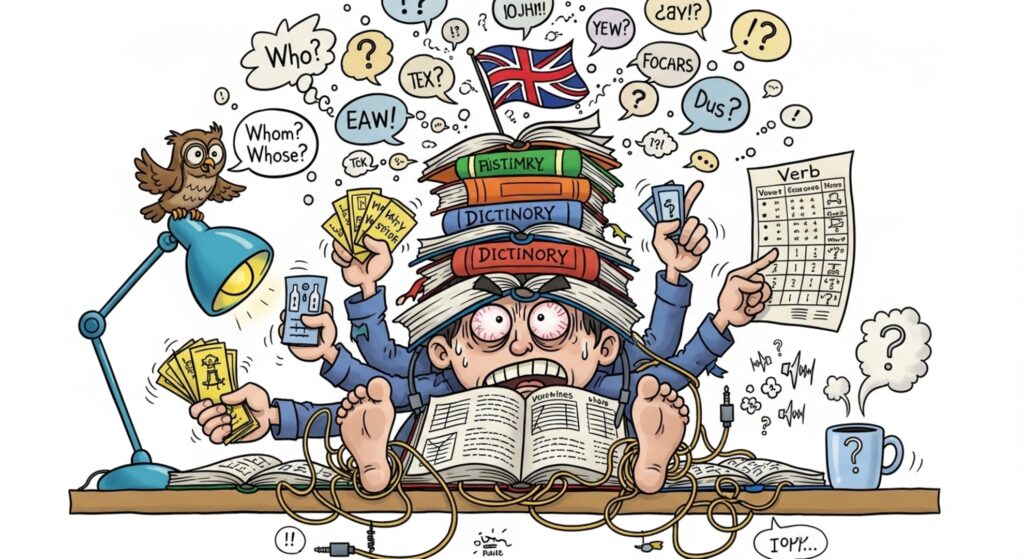
잠깐 쉬어가며 웃어볼까요?
“공부할 때 나 vs 쉬는 시간의 나”
✒️ 작가와 작품 소개: 찰스 디킨스와 올리버 트위스트

찰스 디킨스 (Charles Dickens, 1812~1870)는 빅토리아 시대 영국을 대표하는 가장 위대한 작가 중 한 명입니다. 그의 작품은 당시 가난하고 소외된 사람들의 삶을 생생하게 묘사하며, 사회의 부조리와 불공평함을 고발하는 것으로 유명합니다. 디킨스는 가난 때문에 어린 시절 공장에서 일했던 경험이 있어, 그의 소설에는 사회적 약자에 대한 깊은 공감과 연민이 담겨 있습니다.
그의 두 번째 소설인 ‘올리버 트위스트 (Oliver Twist, 1837~1839)’는 디킨스의 대표작 중 하나입니다. 이 작품은 런던의 비참한 구빈원에서 태어난 고아 소년 올리버가 범죄자들의 손에서 벗어나 선량한 사람들의 도움으로 행복을 찾는 과정을 그리고 있습니다.
- 배경: 19세기 영국 런던. 산업 혁명 이후의 빈곤과 범죄가 만연했던 시기입니다.
- 핵심 주제: 빈곤층의 고통, 사회 개혁의 필요성, 그리고 악(惡) 속에서도 굴하지 않는 선(善)과 희망의 힘을 다룹니다.
- 의의: 주인공 올리버가 “Please, sir, I want some more.”(부탁합니다, 선생님, 저는 좀 더 원합니다.)라고 말하는 장면은 사회 비판의 상징적인 명대사로 남아있습니다.
이 페이지를 통해 여러분은 명작의 깊은 감동을 느끼는 동시에, 영어 듣기, 말하기, 독해 능력을 균형 있게 발전시킬 수 있습니다. 올리버의 용감한 이야기와 함께 여러분의 영어 공부 여정이 더욱 즐겁고 유익해지기를 진심으로 바랍니다.