고전 읽기 군주론: 👑니콜로 마키아벨리, 왕초보 레벨
안녕하세요, 영어 학습에 열정을 가진 여러분! 특히 영어 듣기 말하기 실력을 탄탄하게 다지고 싶은 분들을 위해 준비했습니다. 이 자료는 단순히 눈으로 읽는 독해 학습을 넘어섭니다. 영문과 한글 해석, 그리고 핵심 어휘를 함께 보며 자연스럽게 문장 구조를 익힐 수 있도록 구성되어 있습니다. 꾸준히 반복 학습하신다면, 여러분의 영어 듣기, 말하기, 독해 능력 전반이 크게 향상되는 것을 경험하실 수 있을 겁니다.
저희는 앞서 여러분이 보신 《군주론》 왕초보 레벨 글을 기반으로 학습 영상을 제작하여 유튜브에 업로드했습니다. 그리고 이제, 더욱 심층적인 학습을 위해 영문 원본 전체 스크립트와 함께 학습에 도움이 되는 여러 보충 자료를 더한 웹페이지를 홈페이지 내에 작성하고 있습니다. 이 글은 바로 그 학습 웹페이지의 시작을 알리는 인트로 역할을 합니다.
이 페이지의 주인공은 이탈리아의 사상가이자 외교관이었던 **니콜로 마키아벨리(Niccolò Machiavelli)**와 그의 불후의 명작 **《군주론 (The Prince)》**입니다. 16세기 초에 쓰인 이 책은 단순한 정치 지침서를 넘어, 권력을 얻고 유지하는 현실적인 방법론을 제시하며 수백 년간 전 세계 지도자들에게 영향을 미쳤습니다. 이 고전을 가장 기초적인 A1 레벨 영어로 접하며, 고전 소설 작가와 작품에 대한 배경 지식까지 자연스럽게 익히는 효과를 누리시길 바랍니다.
이 페이지를 통해 듣고(영상), 읽고(영문), 이해하고(한글), 암기하는(단어) 4단계 학습을 반복한다면, 기초 영어 실력을 단기간에 놀랍도록 향상시킬 수 있을 것입니다.
🎧 원문 듣기
Let’s Listen!
– 첫 번째: 오디오만 들어보세요 (대략적 내용 파악)
– 두 번째: 스크립트를 보며 함께 들어보세요 (정확한 이해)
– 세 번째: 스크립트 없이 다시 들어보세요 (실력 확인)
Hello everyone, whether this is your first time here or you’re a regular subscriber to the Shoong Sshoong Channel. Thank you for watching this video.
Have you ever thought about what it truly takes to be a leader? Not just a good person, but a leader who can really change the world, for better or for worse? Today, we are going to dive into a book that asks these very difficult questions. A book that has been talked about for hundreds of years. This book is The Prince by Niccolò Machiavelli. And we are going to explore it together, to understand why it is so important, even today, especially for you, a new English learner at the 왕초보 level.
The Prince is not a long or difficult story with many characters. Instead, it is a guide, a manual, written by a man named Niccolò Machiavelli, who lived a long, long time ago in Italy. He was a thinker, a writer, and a political advisor. He wrote this book to give advice to a new prince, a ruler. He wanted to teach this prince how to get power and, more importantly, how to keep it.
The main idea of The Prince is simple but very surprising. Machiavelli says that a prince should not always be “good” in the way we usually think. A prince must be strong. Sometimes, he needs to be feared, not loved. Why? Because love can be lost easily. People might forget about their love for a prince. But fear, a little bit of fear, makes people listen and follow the rules. It keeps the country safe and stable.
This sounds very harsh, right? Machiavelli is not saying a prince should be cruel just for fun. He says that sometimes, a prince must do things that seem bad for a greater good. For example, if a small act of cruelty can stop a big war and save many lives, then Machiavelli would say that is the right thing to do. He teaches us that the end result is what matters most for a leader. He believes a leader’s actions are judged by their final outcome, not by their initial intentions.
Let’s talk about the two animals Machiavelli uses to describe a prince: the lion and the fox. The lion is strong and powerful. It is brave and can fight off enemies. This is one part of a good prince: being strong and having the power to protect his country. But a prince also needs to be like a fox. A fox is smart and clever. It can see traps and find a way around problems. So, a good prince must be both: as strong as a lion and as smart as a fox. You cannot just be one. If you are only a lion, you might fall into a trap. If you are only a fox, you might not be strong enough to fight.
Machiavelli also talks about fortune. Fortune is like luck or destiny. Machiavelli says that a prince must be ready for fortune. Sometimes good things happen by luck. But a good prince does not just wait for luck. He acts. He prepares. He controls what he can. He is not a boat just floating on the water. He is a captain, a sailor, who uses the winds of fortune but steers the boat himself.
This book is very important because it changed how people think about politics. Before Machiavelli, many people thought a good leader was a person who was always good, honest, and kind. Machiavelli showed that the world is not so simple. He said that a leader must look at the world as it really is, not as we wish it to be. This is called political realism. He believes a leader must be flexible and ready to do what is necessary to survive and to keep the country safe.
So, what does this mean for us? This book teaches us that in life, sometimes we need to be smart and strong. It teaches us to think about the results of our actions. Maybe you have a goal, like learning English. You must be strong like the lion and study hard. But you also need to be clever like the fox. You need to find smart ways to learn. Maybe you use a great app or find a study partner. You need to be flexible and not give up when things are hard.
Reading The Prince can be like looking into a mirror. We see not just what a leader is, but what we might be like in our own lives. It helps us think about our own goals and how we can achieve them. It teaches us to be practical and to not just hope for the best, but to work for it. It is a very powerful book that can change the way you see the world.
So, how does this help you with your English? Reading a classic like The Prince is a big step! It helps you learn new words and new ways to put sentences together. You can listen to this script again and again. Try to repeat some of the sentences. This is a great way to improve your speaking. And when you read the words, you practice your reading skills. Reading about a strong leader can also give you strength in your own life journey, including your journey to learn English.
Thank you so much for joining me today on this journey into The Prince. It is a book that gives us a lot to think about. I encourage you to try to read it yourself one day. You can find simple versions online or in libraries. Remember, every step you take in learning English is a victory. It makes you stronger and smarter, just like a good prince. Keep practicing, keep reading, and never stop learning. You are doing great. We will see you in the next video!
🔡 주요 어휘
왕초보 단계 주요 어휘 (Vocabulary)
💡 핵심 어휘 완전 정복하기:
– 영상 스크립트에 등장하는 중요한 영어 단어들을 모았습니다!
– 유의어/반의어로 어휘력을 확장하세요
⭐ 장기 암기 팁:
– 하루 5-7개씩 나누어 학습하고, 다음 날 전날 단어를 다시 확인해보세요!
– 반복이 영어 어휘력의 핵심입니다.
- leader: (명사) 지도자, 우두머리. (유의어: chief, head, commander; 반의어: follower, subordinate)
- explore: (동사) 탐험하다, 탐구하다, 자세히 조사하다.
- advisor: (명사) 조언자, 고문.
- keep: (동사) 유지하다, 지키다. (유의어: maintain, preserve; 반의어: lose, abandon)
- surprising: (형용사) 놀라운, 의외의. (유의어: astonishing, unexpected; 반의어: predictable, common)
- feared: (형용사) 두려운, 무서운.
- stable: (형용사) 안정된, 견고한. (유의어: steady, secure; 반의어: unstable, shaky)
- harsh: (형용사) 가혹한, 혹독한. (유의어: severe, strict; 반의어: gentle, mild)
- cruelty: (명사) 잔인함, 잔혹 행위. (반의어: kindness, compassion)
- result: (명사) 결과. (유의어: outcome, consequence)
- matter: (동사) 중요하다. (명사) 문제, 사안.
- lion: (명사) 사자.
- fox: (명사) 여우.
- clever: (형용사) 영리한, 교활한. (유의어: smart, cunning; 반의어: stupid, clumsy)
- trap: (명사) 함정, 덫. (동사) 가두다, 덫을 놓다.
- fortune: (명사) 운, 행운; 재산. (유의어: luck, destiny; 반의어: misfortune)
- ready: (형용사) 준비된. (유의어: prepared, set)
- steer: (동사) 조종하다, 나아가게 하다. (유의어: guide, direct)
- politics: (명사) 정치, 정치학.
- practical: (형용사) 실용적인, 현실적인. (유의어: realistic, sensible; 반의어: impractical, idealistic)
- achieve: (동사) 달성하다, 성취하다. (유의어: accomplish, attain; 반의어: fail, miss)
- victory: (명사) 승리. (유의어: win, triumph; 반의어: defeat, loss)
- strength: (명사) 힘, 강점. (유의어: power, force; 반의어: weakness)
- journey: (명사) 여행, 여정. (유의어: trip, voyage)
- reason: (명사) 이유. (동사) 추론하다.
- guide: (명사) 안내서, 길잡이. (동사) 안내하다.
- core: (명사) 핵심, 중심.
- believe: (동사) 믿다.
- control: (동사) 통제하다. (명사) 통제, 제어.
- captain: (명사) 선장, 우두머리.
- change: (동사) 바꾸다, 변화시키다. (명사) 변화.
- honest: (형용사) 정직한. (유의어: truthful, sincere; 반의어: dishonest)
- flexible: (형용사) 유연한. (유의어: adaptable, pliable; 반의어: rigid, inflexible)
- improve: (동사) 향상시키다, 개선하다. (유의어: enhance, better; 반의어: worsen, decline)
- repeat: (동사) 반복하다.
- encourage: (동사) 격려하다, 권장하다. (유의어: motivate, inspire; 반의어: discourage)
- story: (명사) 이야기, 줄거리.
- character: (명사) 등장인물, 성격.
- country: (명사) 나라, 국가.
- rule: (명사) 규칙. (동사) 통치하다.
- act: (동사) 행동하다. (명사) 행동.
- power: (명사) 힘, 권력. (유의어: authority, strength)
- love: (명사) 사랑. (동사) 사랑하다.
- think: (동사) 생각하다.
- work: (동사) 일하다, 노력하다. (명사) 일, 직업.
- learn: (동사) 배우다.
- study: (동사) 공부하다. (명사) 공부.
- goal: (명사) 목표. (유의어: aim, objective)
- hope: (동사) 바라다, 희망하다. (명사) 희망.
- journey: (명사) 여정, 여행.
- mirror: (명사) 거울.
- feel: (동사) 느끼다.
- simple: (형용사) 단순한, 간단한. (유의어: easy, basic; 반의어: complex, difficult)
- strong: (형용사) 강한. (유의어: powerful, firm; 반의어: weak)
- safe: (형용사) 안전한. (유의어: secure; 반의어: dangerous)
- fight: (동사) 싸우다. (명사) 싸움.
- way: (명사) 방법, 길.
- listen: (동사) 듣다.
- read: (동사) 읽다.
- write: (동사) 쓰다.
- show: (동사) 보여주다.
- believe: (동사) 믿다.
- help: (동사) 돕다. (명사) 도움.
- use: (동사) 사용하다.
- know: (동사) 알다.
- make: (동사) 만들다.
- give: (동사) 주다.
- take: (동사) 취하다, 잡다.
📒 문장 해석
📖 문장 하나하나 완벽 이해하기
– 영어 실력의 비밀은 정확한 문장 이해에 있습니다!
– 원어민이 자연스럽게 사용하는 표현들을 한국어로 꼼꼼히 분석해드려요.
🎯 이 섹션에서 얻을 수 있는 것:
– 자연스러운 영어 표현 패턴 습득
– 문맥에 맞는 정확한 번역 실력
– 영어 사고방식 이해
💡 활용 팁:
– 영어 문장을 먼저 읽고 → 의미를 추측해본 후 → 해석을 확인해보세요!
Hello everyone, whether this is your first time here or you’re a regular subscriber to the Shoong Sshoong Channel.
안녕하세요, 슝쓩 채널을 처음 시청하시는 분이든, 정기 구독자이든 모두 환영합니다.
- subscriber: (명사) 구독자
- channel: (명사) 채널
Thank you for watching this video.
이 영상을 시청해주셔서 감사합니다.
- video: (명사) 영상
Have you ever thought about what it truly takes to be a leader?
진정한 지도자가 되는 데 무엇이 필요한지 생각해 본 적이 있나요?
- leader: (명사) 지도자
Not just a good person, but a leader who can really change the world, for better or for worse?
단순히 좋은 사람이 되는 것을 넘어, 좋든 나쁘든 세상을 진정으로 바꿀 수 있는 지도자 말입니다.
- person: (명사) 사람
- world: (명사) 세상
- change: (동사) 바꾸다
Today, we are going to dive into a book that asks these very difficult questions.
오늘 우리는 이 매우 어려운 질문들을 던지는 한 책에 대해 깊이 탐구할 것입니다.
- book: (명사) 책
- question: (명사) 질문
A book that has been talked about for hundreds of years.
수백 년 동안 회자되어 온 책이죠.
- year: (명사) 년
This book is The Prince by Niccolò Machiavelli.
이 책은 바로 니콜로 마키아벨리가 쓴 《군주론》입니다.
And we are going to explore it together, to understand why it is so important, even today, especially for you, a new English learner at the 왕초보 level.
그리고 우리는 이 책이 왜 오늘날까지도 그토록 중요한지 함께 알아볼 것입니다. 특히 왕초보 레벨의 초보 영어 학습자인 여러분에게 말이죠.
- explore: (동사) 탐구하다
- understand: (동사) 이해하다
- learner: (명사) 학습자
- level: (명사) 수준
The Prince is not a long or difficult story with many characters.
《군주론》은 많은 등장인물이 나오는 길거나 어려운 이야기가 아닙니다.
- story: (명사) 이야기
- character: (명사) 등장인물
Instead, it is a guide, a manual, written by a man named Niccolò Machiavelli, who lived a long, long time ago in Italy.
대신, 그것은 아주 오래전 이탈리아에 살았던 니콜로 마키아벨리라는 사람이 쓴 지침서, 즉 안내서입니다.
- guide: (명사) 지침서
- manual: (명사) 안내서
- man: (명사) 남자
He was a thinker, a writer, and a political advisor.
그는 사상가이자 작가였으며 정치 고문이었습니다.
- writer: (명사) 작가
- advisor: (명사) 고문
He wrote this book to give advice to a new prince, a ruler.
그는 새로운 군주, 즉 통치자에게 조언을 주기 위해 이 책을 썼습니다.
- give: (동사) 주다
- advice: (명사) 조언
- prince: (명사) 군주
- ruler: (명사) 통치자
He wanted to teach this prince how to get power and, more importantly, how to keep it.
그는 이 군주에게 권력을 어떻게 얻고, 더 중요하게는 어떻게 유지하는지 가르치고 싶었습니다.
- teach: (동사) 가르치다
- get: (동사) 얻다
- power: (명사) 힘
- keep: (동사) 유지하다
The main idea of The Prince is simple but very surprising.
《군주론》의 핵심 사상은 간단하지만 매우 놀랍습니다.
- idea: (명사) 생각
Machiavelli says that a prince should not always be “good” in the way we usually think.
마키아벨리는 군주가 우리가 일반적으로 생각하는 것처럼 항상 “선해야” 하는 것은 아니라고 말합니다.
- say: (동사) 말하다
- think: (동사) 생각하다
A prince must be strong.
군주는 강해야 합니다.
Sometimes, he needs to be feared, not loved.
때로는 사랑받는 대신 두려움을 받아야 합니다.
- need: (동사) 필요하다
- fear: (명사) 두려움
- love: (명사) 사랑
Why?
왜일까요?
Because love can be lost easily.
사랑은 쉽게 사라질 수 있기 때문입니다.
- lose: (동사) 잃다
People might forget about their love for a prince.
사람들은 군주에 대한 사랑을 잊어버릴 수 있습니다.
- people: (명사) 사람들
- forget: (동사) 잊다
But fear, a little bit of fear, makes people listen and follow the rules.
하지만 약간의 두려움은 사람들이 말을 듣고 규칙을 따르게 만듭니다.
- make: (동사) 만들다
- listen: (동사) 듣다
- follow: (동사) 따르다
- rule: (명사) 규칙
It keeps the country safe and stable.
이는 나라를 안전하고 안정적으로 유지합니다.
- country: (명사) 나라
This sounds very harsh, right?
이것은 매우 가혹하게 들리죠?
- sound: (동사) ~하게 들리다
Machiavelli is not saying a prince should be cruel just for fun.
마키아벨리는 군주가 그저 재미로 잔인해야 한다고 말하는 것이 아닙니다.
- fun: (명사) 재미
He says that sometimes, a prince must do things that seem bad for a greater good.
그는 때때로 군주가 더 큰 선을 위해 나쁘게 보이는 일들을 해야만 한다고 말합니다.
- thing: (명사) 것
- seem: (동사) ~처럼 보이다
For example, if a small act of cruelty can stop a big war and save many lives, then Machiavelli would say that is the right thing to do.
예를 들어, 작은 잔인한 행동이 큰 전쟁을 막고 많은 생명을 구할 수 있다면, 마키아벨리는 그것이 옳은 일이라고 말할 것입니다.
- example: (명사) 예시
- act: (명사) 행동
- stop: (동사) 멈추다
- war: (명사) 전쟁
- save: (동사) 구하다
- life: (명사) 생명
He teaches us that the end result is what matters most for a leader.
그는 지도자에게 최종 결과가 가장 중요하다는 것을 가르칩니다.
- end: (명사) 끝
- result: (명사) 결과
- matter: (동사) 중요하다
He believes a leader’s actions are judged by their final outcome, not by their initial intentions.
그는 지도자의 행동이 초기의 의도가 아니라 최종 결과에 의해 판단된다고 믿습니다.
- believe: (동사) 믿다
- action: (명사) 행동
- judge: (동사) 판단하다
- outcome: (명사) 결과
- intention: (명사) 의도
Let’s talk about the two animals Machiavelli uses to describe a prince: the lion and the fox.
마키아벨리가 군주를 묘사하기 위해 사용하는 두 동물, 사자와 여우에 대해 이야기해 봅시다.
- talk: (동사) 이야기하다
- animal: (명사) 동물
- describe: (동사) 묘사하다
- lion: (명사) 사자
- fox: (명사) 여우
The lion is strong and powerful.
사자는 강하고 강력합니다.
It is brave and can fight off enemies.
용감하며 적들과 싸울 수 있습니다.
- fight: (동사) 싸우다
- enemy: (명사) 적
This is one part of a good prince: being strong and having the power to protect his country.
이것이 좋은 군주의 한 부분입니다: 강하고 나라를 보호할 힘을 갖는 것.
- part: (명사) 부분
- protect: (동사) 보호하다
But a prince also needs to be like a fox.
하지만 군주는 여우와 같을 필요도 있습니다.
A fox is smart and clever.
여우는 영리하고 교활합니다.
It can see traps and find a way around problems.
함정을 보고 문제를 해결할 방법을 찾을 수 있습니다.
- see: (동사) 보다
- trap: (명사) 함정
- find: (동사) 찾다
- problem: (명사) 문제
So, a good prince must be both: as strong as a lion and as smart as a fox.
따라서 좋은 군주는 이 두 가지를 모두 갖춰야 합니다: 사자처럼 강하고 여우처럼 영리해야 합니다.
You cannot just be one.
둘 중 하나만으로는 안 됩니다.
- one: (명사) 하나
If you are only a lion, you might fall into a trap.
사자만 같다면 함정에 빠질 수 있습니다.
- fall: (동사) 떨어지다
If you are only a fox, you might not be strong enough to fight.
여우만 같다면 싸울 만큼 강하지 않을 수 있습니다.
Machiavelli also talks about fortune.
마키아벨리는 또한 운명에 대해서도 이야기합니다.
- fortune: (명사) 운명
Fortune is like luck or destiny.
운명은 행운이나 숙명과 같습니다.
- luck: (명사) 행운
- destiny: (명사) 운명
Machiavelli says that a prince must be ready for fortune.
마키아벨리는 군주가 운명에 대비해야 한다고 말합니다.
Sometimes good things happen by luck.
때때로 좋은 일은 운으로 일어납니다.
- happen: (동사) 일어나다
But a good prince does not just wait for luck.
하지만 좋은 군주는 그저 운을 기다리지 않습니다.
- wait: (동사) 기다리다
He acts.
그는 행동합니다.
- act: (동사) 행동하다
He prepares.
그는 준비합니다.
- prepare: (동사) 준비하다
He controls what he can.
그는 자신이 통제할 수 있는 것을 통제합니다.
- control: (동사) 통제하다
He is not a boat just floating on the water.
그는 그저 물 위에 떠다니는 배가 아닙니다.
- boat: (명사) 배
- water: (명사) 물
He is a captain, a sailor, who uses the winds of fortune but steers the boat himself.
그는 운명의 바람을 이용하지만, 스스로 배를 조종하는 선장, 항해사입니다.
- captain: (명사) 선장
- sailor: (명사) 선원
- use: (동사) 사용하다
- wind: (명사) 바람
- steer: (동사) 조종하다
This book is very important because it changed how people think about politics.
이 책은 정치에 대한 사람들의 생각을 바꾸었기 때문에 매우 중요합니다.
- politics: (명사) 정치
Before Machiavelli, many people thought a good leader was a person who was always good, honest, and kind.
마키아벨리 이전에는 많은 사람들이 좋은 지도자는 항상 선하고 정직하며 친절한 사람이라고 생각했습니다.
- honest: (형용사) 정직한
Machiavelli showed that the world is not so simple.
마키아벨리는 세상이 그렇게 단순하지 않다는 것을 보여주었습니다.
- show: (동사) 보여주다
He said that a leader must look at the world as it really is, not as we wish it to be.
그는 지도자가 우리가 바라는 세상이 아니라, 실제로 존재하는 세상을 보아야 한다고 말했습니다.
- look: (동사) 보다
- wish: (동사) 바라다
This is called political realism.
이것을 정치적 현실주의라고 부릅니다.
- call: (동사) 부르다
He believes a leader must be flexible and ready to do what is necessary to survive and to keep the country safe.
그는 지도자가 생존하고 나라를 안전하게 지키기 위해 유연하고 필요한 것을 할 준비가 되어 있어야 한다고 믿습니다.
- survive: (동사) 생존하다
So, what does this mean for us?
그렇다면 이것이 우리에게 어떤 의미일까요?
- mean: (동사) 의미하다
This book teaches us that in life, sometimes we need to be smart and strong.
이 책은 우리에게 인생에서 때로는 영리하고 강해져야 한다는 것을 가르칩니다.
- life: (명사) 삶
It teaches us to think about the results of our actions.
우리 행동의 결과에 대해 생각하도록 가르칩니다.
Maybe you have a goal, like learning English.
아마 여러분은 영어 학습과 같은 목표를 가지고 있을 것입니다.
- goal: (명사) 목표
- English: (명사) 영어
You must be strong like the lion and study hard.
여러분은 사자처럼 강하게 열심히 공부해야 합니다.
- study: (동사) 공부하다
But you also need to be clever like the fox.
하지만 여우처럼 영리할 필요도 있습니다.
You need to find smart ways to learn.
영어를 배울 영리한 방법들을 찾아야 합니다.
- way: (명사) 방법
Maybe you use a great app or find a study partner.
아마 훌륭한 앱을 사용하거나 스터디 파트너를 찾을 수도 있겠죠.
- app: (명사) 앱
- partner: (명사) 파트너
You need to be flexible and not give up when things are hard.
일이 힘들 때 유연하고 포기하지 않아야 합니다.
- give: (동사) 주다
Reading The Prince can be like looking into a mirror.
《군주론》을 읽는 것은 거울을 들여다보는 것과 같습니다.
- mirror: (명사) 거울
We see not just what a leader is, but what we might be like in our own lives.
우리는 지도자가 어떤 사람인지뿐만 아니라 우리 자신의 삶에서 어떤 모습일 수 있는지 보게 됩니다.
It helps us think about our own goals and how we can achieve them.
그것은 우리 자신의 목표와 그것을 어떻게 달성할 수 있는지 생각하는 데 도움이 됩니다.
- achieve: (동사) 달성하다
It teaches us to be practical and to not just hope for the best, but to work for it.
그것은 우리에게 그저 최선을 바라기만 하는 것이 아니라, 그것을 위해 노력하는 실용적인 사람이 되도록 가르칩니다.
- hope: (동사) 바라다
- work: (동사) 노력하다
It is a very powerful book that can change the way you see the world.
그것은 세상을 보는 방식을 바꿀 수 있는 매우 강력한 책입니다.
So, how does this help you with your English?
그렇다면 이것이 여러분의 영어 학습에 어떻게 도움이 될까요?
Reading a classic like The Prince is a big step!
《군주론》과 같은 고전을 읽는 것은 큰 한 걸음입니다!
- classic: (명사) 고전
- step: (명사) 걸음
It helps you learn new words and new ways to put sentences together.
그것은 새로운 단어와 문장을 구성하는 새로운 방법을 배우는 데 도움이 됩니다.
- word: (명사) 단어
- put: (동사) 놓다
- sentence: (명사) 문장
You can listen to this script again and again.
이 스크립트를 계속해서 들을 수 있습니다.
- listen: (동사) 듣다
- script: (명사) 대본
Try to repeat some of the sentences.
문장 몇 개를 따라 해보세요.
- repeat: (동사) 반복하다
This is a great way to improve your speaking.
이것은 말하기 능력을 향상시키는 훌륭한 방법입니다.
- improve: (동사) 향상시키다
- speaking: (명사) 말하기
And when you read the words, you practice your reading skills.
그리고 단어를 읽을 때, 여러분은 읽기 능력을 연습하게 됩니다.
- practice: (동사) 연습하다
- reading: (명사) 읽기
- skill: (명사) 기술
Reading about a strong leader can also give you strength in your own life journey, including your journey to learn English.
강한 지도자에 대해 읽는 것은 영어 학습 여정을 포함하여 여러분 자신의 인생 여정에서 힘을 줄 수 있습니다.
- strength: (명사) 힘
- journey: (명사) 여정
Thank you for exploring The Prince with me.
저와 함께 《군주론》을 탐구해 주셔서 감사합니다.
I hope this video helps you to be a stronger learner.
이 영상이 여러분이 더 강한 학습자가 되는 데 도움이 되기를 바랍니다.
See you next time on the Shoongshoong Channel!
슝슝 채널에서 다음에 만나요!
🔍 핵심 요점
🔍 문법과 표현의 핵심 포인트
– 단순한 해석을 넘어서, 진짜 활용할 수 있는 영어를 배워보세요!
– 각 문장에 숨어있는 문법 규칙과 실용적인 표현법을 상세히 설명드립니다.
⚡ 핵심 학습 포인트:
– 실제 대화에서 바로 써먹을 수 있는 표현
– 문법 규칙의 실전 적용법
– 비슷한 상황에서 응용 가능한 패턴
🌟 학습 효과:
– 원리를 이해하면 암기가 아닌 자연스러운 영어 구사가 가능합니다!
📝 권장 학습법:
– 예시 문장을 소리내어 읽고 → 핵심 포인트 이해 → 비슷한 문장 만들어보기
What it truly takes to be a leader
- This phrase uses “what it takes” to ask about the necessary qualities or actions for a specific role. It’s a common, useful expression for discussing requirements or qualifications.
- Example: It takes a lot of hard work to be a good student.
- (훌륭한 학생이 되기 위해서는 많은 노력이 필요하다.)
For better or for worse
- This idiom means that something happens with both good and bad results. It’s a simple way to express a complete range of outcomes.
- Example: I’ll be there for you, for better or for worse.
- (좋든 나쁘든, 내가 네 곁에 있을게.)
To dive into a book
- This is an informal, metaphorical phrase that means to start reading or studying a book with great focus and enthusiasm. It suggests a deep engagement with the topic.
- Example: Let’s dive into the next chapter of our English book.
- (우리 영어책의 다음 장을 깊이 파고들어 보자.)
To get power and, more importantly, to keep it
- This structure uses “more importantly” to emphasize the second point. It shows that one idea is of greater significance than the first.
- Example: I need to study, and more importantly, I need to understand the material.
- (나는 공부를 해야 하고, 더 중요한 것은 그 내용을 이해해야 한다는 것이다.)
The end result is what matters most
- This sentence structure highlights the subject (“the end result”) by using “what matters most.” It’s a powerful way to state a core belief or principle.
- Example: In a race, the finish line is what matters most.
- (경주에서는 결승선이 가장 중요하다.)
Instead, it is a guide
- The word “instead” is a key transition word. It signals a contrast with the previous idea. It helps to clarify what something is, by first saying what it is not.
- Example: We didn’t go to the park. Instead, we stayed home.
- (우리는 공원에 가지 않았다. 대신에 집에 머물렀다.)
A little bit of fear makes people listen
- “A little bit of” is a common phrase to talk about a small, indefinite amount of something, especially abstract nouns like “fear,” “love,” or “time.”
- Example: A little bit of practice can make a big difference.
- (약간의 연습이 큰 변화를 만들 수 있다.)
He is not a boat just floating on the water
- This is a metaphor. It compares a person to a boat to illustrate a point. This kind of comparison makes abstract ideas easier to understand.
- Example: My friend is a rock; he is always strong for me.
- (내 친구는 바위와 같아; 그는 항상 나를 위해 강해.)
This book is very important because it changed how people think
- The structure “is important because…” is a fundamental way to explain the reason for something. It connects a fact (the book’s importance) with its cause (it changed thinking).
- Example: English is important because it is a global language.
- (영어가 중요한 이유는 그것이 세계적인 언어이기 때문이다.)
Reading a classic like The Prince is a big step!
- The phrase “a big step” is an idiom that means an important or significant action or milestone. It shows progress in a journey or process.
- Example: Learning to speak English is a big step in my life.
- (영어를 말하는 법을 배우는 것은 내 인생의 큰 한 걸음이다.)
🎉 수고하셨습니다.
🎉 학습 완료! 🎉
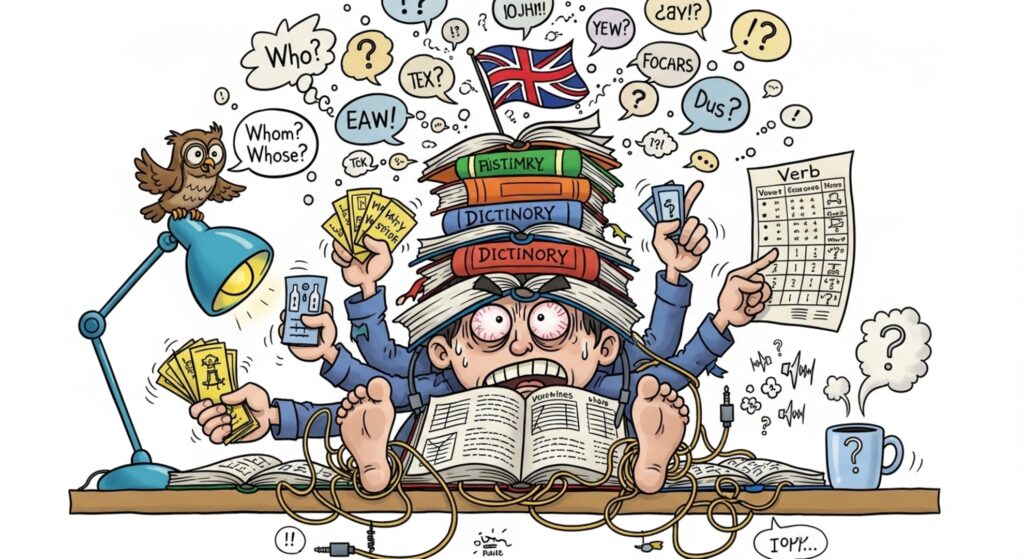
잠깐 쉬어가며 웃어볼까요?
“공부할 때 나 vs 쉬는 시간의 나”
🚀 학습 여정을 응원하며
저희가 제공하는 이 웹페이지를 통해 여러분의 영어 공부 여정이 더욱 즐겁고 의미 있게 확장되고 실질적인 도움을 얻을 수 있기를 진심으로 바랍니다. 꾸준한 학습으로 영어 실력 향상이라는 목표를 꼭 성취하시길 응원합니다!
