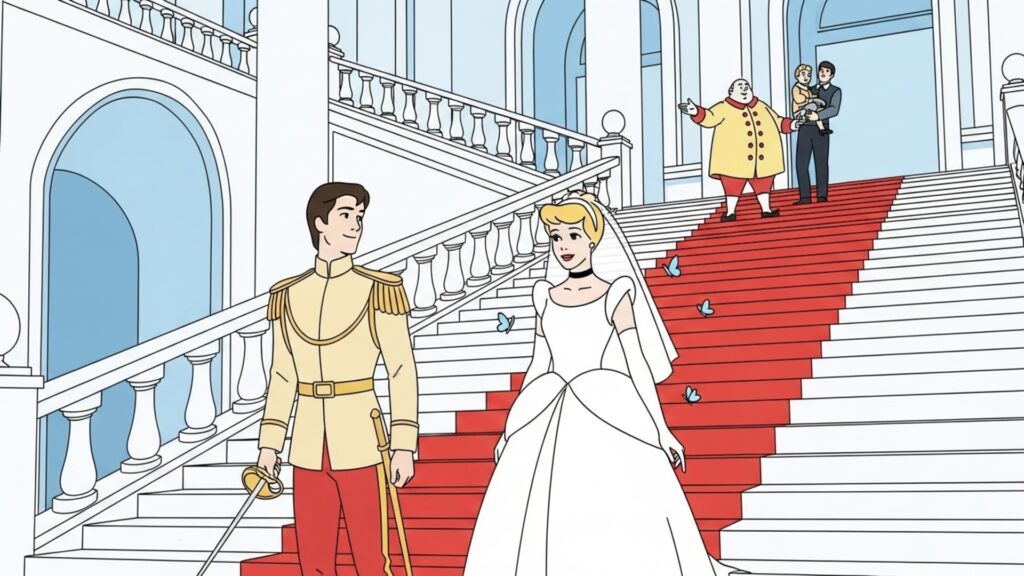
신데렐라: 왕초보
🚀 왕초보 레벨 신데렐라로 영어 실력 키우기
왕초보 영어 듣기 말하기의 첫걸음은 쉽고 재미있는 이야기에 익숙해지는 것입니다. 오늘 여러분이 읽을 신데렐라 이야기는 단순한 동화가 아닙니다. 이 글은 가장 쉬운 영어를 사용하여 문장 구조와 필수 어휘를 반복적으로 접하도록 특별히 작성되었습니다. 이 글을 통해 여러분은 영어 독해의 자신감을 얻고, 자연스러운 발음을 들으며 말하기 연습을 할 수 있어, 영어 공부 전반에 큰 도움이 될 것입니다.
🎬 신데렐라 영상과 고전 문학과의 만남
저희는 여러분의 효율적인 학습을 돕기 위해, 이 왕초보 레벨의 신데렐라 원문을 기반으로 제작한 영상을 곧 유튜브 채널에 업로드할 예정입니다. 영상은 귀에 쏙쏙 들어오는 원어민의 음성과 함께 학습 효율을 극대화할 수 있도록 구성됩니다. 또한, 현재 이 영문 원본과 더불어 이야기 이해를 돕는 핵심 어휘 목록, 문장 구조 해설, 그리고 섀도잉 연습 자료 등 다양한 보충 학습 자료를 담은 웹페이지를 제작하고 있습니다. 이 웹페이지는 여러분이 언제든지 원문과 자료를 반복 학습하며 실력을 다질 수 있는 훌륭한 학습 공간이 될 것입니다.
더 나아가, 신데렐라는 수많은 이야기의 원천이 된 고전 명작입니다. 신데렐라의 작가는 보통 샤를 페로(Charles Perrault, 프랑스) 또는 **그림 형제(Brothers Grimm, 독일)**로 알려져 있습니다. 샤를 페로의 1697년 작품 ∗Cendrillon∗(상드리용)은 유리 구두와 호박 마차와 같은 상징적인 요소를 처음 도입했으며, 이후 그림 형제가 1812년 발표한 Aschenputtel(애셴푸텔)은 유럽 전역에 이 이야기를 널리 알리는 데 기여했습니다. 이러한 고전 소설 작가와 그들의 작품을 함께 살펴보는 것은, 단순히 영어를 배우는 것을 넘어 서양 문화와 문학의 배경을 이해하는 깊은 경험을 선사할 것입니다. 이 이야기가 수백 년 동안 사랑받아온 이유를 영어를 통해 직접 느껴보세요.
🎧 원문 듣기
Let’s Listen!
– 첫 번째: 오디오만 들어보세요 (대략적 내용 파악)
– 두 번째: 스크립트를 보며 함께 들어보세요 (정확한 이해)
– 세 번째: 스크립트 없이 다시 들어보세요 (실력 확인)
Hello, everyone, whether this is your first time listening or if you are a regular subscriber to the Shoong Sshoong Channel. Thank you so much for watching this video.
What if I told you that a single story could change the way you see dreams and kindness? What if a simple tale could help you learn English and feel more confident? Today, we are not just reading a book. We are stepping into a magical world, a story that everyone knows but few have truly experienced. We are going to explore the classic story of Cinderella. This story is perfect for English learners at the 왕초 level. The language is simple, clear, and full of emotion. You will hear words and phrases that you can use every day. This video will help you listen and understand. It will also give you new words to practice speaking. By the end, you won’t just know the story; you will have felt its magic and learned a little more about yourself and the power of being good.
Our journey begins with a young girl. She is kind and gentle. Her name is Cinderella. She lives with her father and mother. They love her very much. But one day, her mother becomes very sick. She tells Cinderella to always be good and kind. “Remember, my dear,” she says. “Be kind and have courage.” After that, her mother passes away. This is a very sad time for Cinderella. A little later, her father marries a new woman. This new woman has two daughters. Their names are Anastasia and Drizella. They are not kind. They are selfish and mean. Soon, Cinderella’s father also passes away. Now, Cinderella is alone with her stepmother and two stepsisters.
The new family is not nice to Cinderella. They are cruel. They do not see her kindness. They make her their servant. They call her “Cinderella” because she is always covered in “cinders” from the fireplace. They make her cook, clean, and wash their clothes all day. They have new dresses, but Cinderella has only old, ragged clothes. The two stepsisters laugh at her. They make her life very difficult. But Cinderella always remembers her mother’s words. She is still kind. She talks to the mice and the birds. They are her friends. They help her and cheer her up.
One day, a big letter comes to the house. It is an invitation from the palace. The Prince is having a ball. He wants to find a wife. Every single girl in the kingdom is invited. The stepsisters are so excited. They dream of marrying the Prince. They spend all their time getting ready. They buy new dresses. Cinderella helps them. She irons their dresses and combs their hair. She dreams of going to the ball, too. She asks her stepmother, “Can I go to the ball?” The stepmother laughs. “You? Go to the ball? You have nothing to wear!” But then she says, “You can go if you finish all your chores and find a dress.” The stepsisters give Cinderella so many chores. It is impossible to finish them all.
But Cinderella is not alone. Her animal friends want to help. The mice, led by Gus and Jaq, work all day. They find old clothes. They sew and create a beautiful pink dress for her. They are so happy to see her happy. When the stepsisters see the dress, they are angry. “Is that my old ribbon?” one says. “Is that my old lace?” the other says. They tear the dress. They rip it into pieces. Cinderella is heartbroken. She runs to the garden and cries. She has no dress. She cannot go to the ball. She feels all alone.
Suddenly, a light appears. A kind lady stands before her. She has a magical wand. She is Cinderella’s Fairy Godmother. Cinderella is so surprised. “Don’t cry,” the Fairy Godmother says. “You will go to the ball.” But Cinderella has nothing. “We can fix that,” the Fairy Godmother smiles. She points to a pumpkin. “A pumpkin?” Cinderella says. The Fairy Godmother waves her wand. Bibbidi-Bobbidi-Boo! The pumpkin turns into a beautiful carriage. Then, she points to the mice. They become horses. The dog becomes a driver, and the horse becomes a footman. The Fairy Godmother is amazing.
Now, Cinderella needs a dress. Her Fairy Godmother waves her wand again. Cinderella’s torn clothes turn into a gorgeous blue dress. It sparkles like a star. She also gives Cinderella glass slippers. They are so beautiful. They are magical. “Remember,” the Fairy Godmother tells her. “You must come home by midnight. The magic will disappear at the last stroke of the clock.”
Cinderella arrives at the ball. She is so beautiful. No one knows who she is. Not even her stepfamily. The Prince sees her. He falls in love immediately. He dances with her all night. He does not dance with anyone else. The stepsisters are jealous. “Who is that girl?” they wonder. The clock begins to strike twelve. Cinderella remembers her Fairy Godmother’s words. “Oh, no!” she says. She runs away. She runs down the stairs. As she runs, one of her glass slippers falls off. The Prince sees her run. He tries to follow her, but she is too fast. All he has is the one glass slipper.
The next morning, the Prince sends his Grand Duke to find the girl. The Grand Duke travels all over the kingdom. Every single girl must try on the slipper. He comes to Cinderella’s house. The stepsisters are very excited. “I am the one!” Anastasia says. She tries to put on the slipper, but her foot is too big. “No, I am the one!” Drizella says. Her foot is also too big. They are sad. The stepmother says, “There are no other girls here.” But the Grand Duke sees Cinderella. “What about her?” he asks. The stepmother says, “She is just a servant.” But the Grand Duke insists. Cinderella tries on the slipper. It fits perfectly. The stepmother and stepsisters are shocked. They cannot believe it.
Cinderella shows them the other slipper. Now, they know the truth. They are so sorry for being mean. Cinderella forgives them. She is still kind. Soon after, Cinderella marries the Prince. She becomes a princess. They live happily ever after.
This is more than just a fairy tale. It teaches us important lessons. It teaches us about the power of kindness. Even when people are mean, being kind makes you strong. It teaches us about hope. Even in dark times, magic can happen. It teaches us about dreams. If you believe in yourself, your dreams can come true.
So, what can we take from this story? Be like Cinderella. Be kind. Be brave. Have hope. And remember that the simplest stories can have the biggest magic. This story is a perfect way to practice your English. The words are simple, but the message is big. Reading this classic will help you build your vocabulary and feel more confident. As you listen and read, you can practice saying the words. Try to repeat the phrases. This is how you learn.
Thank you again for watching, whether you are a new viewer or a long-time subscriber to the Shoong Sshoong Channel. Remember, every story you read and every word you learn brings you closer to your goals. Keep practicing, keep listening, and never stop believing in your own magic. I hope this video helps you feel more confident and inspired in your English journey.
🔡 주요 어휘
왕초보 단계 주요 어휘 (Vocabulary)
💡 핵심 어휘 완전 정복하기:
– 영상 스크립트에 등장하는 중요한 영어 단어들을 모았습니다!
– 유의어/반의어로 어휘력을 확장하세요
⭐ 장기 암기 팁:
– 하루 5-7개씩 나누어 학습하고, 다음 날 전날 단어를 다시 확인해보세요!
– 반복이 영어 어휘력의 핵심입니다.
- change: (동사) 바꾸다, 변하다
- see: (동사) 보다, 알다
- dream: (명사) 꿈, 소망
- kindness: (명사) 친절, 다정함
- confident: (형용사) 자신감 있는, 확신하는
- explore: (동사) 탐험하다, 자세히 살피다
- classic: (형용사) 고전적인, 대표적인
- simple: (형용사) 단순한, 쉬운
- clear: (형용사) 명확한, 깨끗한
- emotion: (명사) 감정, 정서
- practice: (동사) 연습하다, 훈련하다
- journey: (명사) 여정, 여행
- begin: (동사) 시작하다, 출발하다
- gentle: (형용사) 온화한, 부드러운
- pass away: (숙어) 돌아가시다, 세상을 떠나다
- marry: (동사) 결혼하다, 혼인하다
- selfish: (형용사) 이기적인, 자기중심적인
- mean: (형용사) 심술궂은, 못된
- alone: (형용사) 혼자인, 고독한
- cruel: (형용사) 잔인한, 가혹한
- servant: (명사) 하인, 봉사자
- cover: (동사) 덮다, 가리다
- fireplace: (명사) 벽난로, 화로
- ragged: (형용사) 낡고 해진, 너덜너덜한
- difficult: (형용사) 어려운, 힘든
- remember: (동사) 기억하다, 잊지 않다
- cheer up: (숙어) 힘내다, 격려하다
- invitation: (명사) 초대, 초대장
- palace: (명사) 궁전, 대궐
- ball: (명사) 무도회, 공
- kingdom: (명사) 왕국, 나라
- excited: (형용사) 신이 난, 들뜬
- dream of: (숙어) ~을 꿈꾸다, ~을 바라다
- chore: (명사) 집안일, 허드렛일
- impossible: (형용사) 불가능한, 할 수 없는
- sew: (동사) 꿰매다, 바느질하다
- create: (동사) 만들다, 창조하다
- angry: (형용사) 화난, 성난
- tear: (동사) 찢다, 눈물
- heartbroken: (형용사) 상심한, 비탄에 잠긴
- run: (동사) 달리다, 뛰다
- suddenly: (부사) 갑자기, 불현듯
- light: (명사) 빛, 전등
- appear: (동사) 나타나다, 보이다
- magical: (형용사) 마법의, 신비한
- wand: (명사) 지팡이, 마술봉
- surprise: (명사) 놀라움, 뜻밖의 일
- pumpkin: (명사) 호박
- turn into: (숙어) ~로 변하다, ~이 되다
- carriage: (명사) 마차, 탈것
- driver: (명사) 운전사, 기사
- gorgeous: (형용사) 화려한, 멋진
- sparkle: (동사) 반짝이다, 빛나다
- slipper: (명사) 실내화, 슬리퍼
- midnight: (명사) 자정, 밤 열두 시
- disappear: (동사) 사라지다, 없어지다
- arrive: (동사) 도착하다, 이르다
- fall in love: (숙어) 사랑에 빠지다, 반하다
- dance: (동사) 춤추다, 무용하다
- jealous: (형용사) 질투하는, 부러워하는
- follow: (동사) 따라가다, 뒤쫓다
- find: (동사) 찾다, 발견하다
- travel: (동사) 여행하다, 이동하다
- fit: (동사) (크기 등이) 맞다, 적합하다
- perfectly: (부사) 완벽하게, 아주 잘
- shock: (명사) 충격, 놀라게 하다
- believe: (동사) 믿다, 신뢰하다
- truth: (명사) 진실, 사실
- forgive: (동사) 용서하다, 봐주다
- princess: (명사) 공주
- live happily ever after: (숙어) 영원히 행복하게 살다
- tale: (명사) 이야기, 동화
- lesson: (명사) 교훈, 가르침
- hope: (명사) 희망, 기대
- brave: (형용사) 용감한, 용기 있는
- message: (명사) 메시지, 교훈
- build: (동사) 만들다, 쌓다
- vocabulary: (명사) 어휘, 단어
- repeat: (동사) 반복하다, 따라 하다
- goal: (명사) 목표, 목적
- inspire: (동사) 영감을 주다, 고무하다
📒 문장 해석
📖 문장 하나하나 완벽 이해하기
– 영어 실력의 비밀은 정확한 문장 이해에 있습니다!
– 원어민이 자연스럽게 사용하는 표현들을 한국어로 꼼꼼히 분석해드려요.
🎯 이 섹션에서 얻을 수 있는 것:
– 자연스러운 영어 표현 패턴 습득
– 문맥에 맞는 정확한 번역 실력
– 영어 사고방식 이해
💡 활용 팁:
– 영어 문장을 먼저 읽고 → 의미를 추측해본 후 → 해석을 확인해보세요!
Hello, everyone, whether this is your first time listening or if you are a regular subscriber to the Shoong Sshoong Channel.
안녕하세요, 슝쓩 채널을 처음 접하시는 분이든, 정기 구독자이든 모두 환영합니다.
- hello: (감탄사) 안녕하세요, 여보세요
- everyone: (대명사) 모든 사람
- this: (대명사) 이것, 이 사람
- first: (형용사) 첫 번째의
- time: (명사) 시간, 때
- listen: (동사) 듣다
- or: (접속사) 또는
- you: (대명사) 당신, 당신들
- are: (동사) ~이다, ~에 있다
- a: (관사) 하나의, 어떤
- regular: (형용사) 정기적인, 보통의
- subscriber: (명사) 구독자
- to: (전치사) ~로, ~에
- the: (관사) 그
- channel: (명사) 채널
Thank you so much for watching this video.
이 비디오를 시청해 주셔서 정말 감사합니다.
- thank: (동사) 감사하다
- so: (부사) 그렇게, 매우
- much: (부사) 많이
- for: (전치사) ~을 위해, ~에 대하여
- watch: (동사) 보다
- video: (명사) 비디오, 영상
What if I told you that a single story could change the way you see dreams and kindness?
이야기 하나가 꿈과 친절을 보는 방식을 바꿀 수 있다면 어떨까요?
- what: (대명사) 무엇
- if: (접속사) 만약 ~라면
- I: (대명사) 나, 나는
- tell: (동사) 말하다
- that: (접속사) ~라는 것
- single: (형용사) 하나의, 단 하나의
- story: (명사) 이야기
- could: (동사) ~할 수 있었다
- change: (동사) 바꾸다
- way: (명사) 방법, 길
- see: (동사) 보다
- dream: (명사) 꿈
- and: (접속사) 그리고
- kindness: (명사) 친절
What if a simple tale could help you learn English and feel more confident?
단순한 이야기가 영어를 배우고 더 자신감을 갖는 데 도움이 될 수 있다면 어떨까요?
- simple: (형용사) 간단한, 단순한
- tale: (명사) 이야기, 동화
- help: (동사) 돕다
- learn: (동사) 배우다
- English: (명사) 영어
- feel: (동사) 느끼다
- more: (부사) 더
- confident: (형용사) 자신감 있는
Today, we are not just reading a book.
오늘 우리는 단순히 책을 읽는 것이 아닙니다.
- today: (부사) 오늘
- we: (대명사) 우리
- not: (부사) ~아니다
- just: (부사) 단지, 그냥
- read: (동사) 읽다
- book: (명사) 책
We are stepping into a magical world, a story that everyone knows but few have truly experienced.
우리는 마법의 세계로, 모두가 알지만 진정으로 경험한 사람은 거의 없는 이야기 속으로 들어갑니다.
- step: (동사) 걸음을 옮기다
- into: (전치사) ~안으로
- magical: (형용사) 마법의, 마술적인
- world: (명사) 세계
- know: (동사) 알다
- but: (접속사) 그러나
- few: (대명사) 소수의
- have: (동사) 가지다
- truly: (부사) 정말로, 진정으로
- experience: (동사) 경험하다
We are going to explore the classic story of Cinderella.
우리는 고전 이야기인 신데렐라를 탐험할 것입니다.
- going to: (숙어) ~할 예정이다
- explore: (동사) 탐험하다
- classic: (형용사) 고전의, 전형적인
- Cinderella: (고유명사) 신데렐라
This story is perfect for English learners at the 왕초보 level.
이 이야기는 왕초보 레벨의 영어 학습자에게 완벽합니다.
- perfect: (형용사) 완벽한
- learner: (명사) 학습자
- at: (전치사) ~에
The language is simple, clear, and full of emotion.
언어는 간단하고 명확하며 감정이 가득합니다.
- language: (명사) 언어
- clear: (형용사) 명확한, 맑은
- full: (형용사) 가득 찬
- emotion: (명사) 감정
You will hear words and phrases that you can use every day.
여러분은 매일 사용할 수 있는 단어와 구문을 듣게 될 것입니다.
- will: (조동사) ~할 것이다
- hear: (동사) 듣다
- word: (명사) 단어
- phrase: (명사) 구, 구문
- can: (조동사) ~할 수 있다
- use: (동사) 사용하다
- every: (형용사) 모든
- day: (명사) 날, 하루
This video will help you listen and understand.
이 비디오는 여러분이 듣고 이해하는 데 도움이 될 것입니다.
- understand: (동사) 이해하다
It will also give you new words to practice speaking.
또한, 말하기를 연습할 새로운 단어들을 줄 것입니다.
- it: (대명사) 그것
- also: (부사) 또한
- give: (동사) 주다
- new: (형용사) 새로운
- practice: (동사) 연습하다
- speak: (동사) 말하다
By the end, you won’t just know the story; you will have felt its magic and learned a little more about yourself and the power of being good.
마지막에는, 여러분은 이 이야기를 아는 것을 넘어 그 마법을 느끼고 자기 자신과 선함의 힘에 대해 조금 더 배우게 될 것입니다.
- by: (전치사) ~까지, ~에 의해
- end: (명사) 끝
- know: (동사) 알다
- magic: (명사) 마법
- power: (명사) 힘, 능력
- good: (형용사) 좋은, 착한
Our journey begins with a young girl.
우리의 여정은 한 어린 소녀로 시작합니다.
- our: (대명사) 우리의
- journey: (명사) 여정, 여행
- begin: (동사) 시작하다
- young: (형용사) 어린, 젊은
- girl: (명사) 소녀
She is kind and gentle.
그녀는 친절하고 온화합니다.
- she: (대명사) 그녀
- is: (동사) ~이다, ~에 있다
- kind: (형용사) 친절한
- gentle: (형용사) 온화한, 부드러운
Her name is Cinderella.
그녀의 이름은 신데렐라입니다.
- her: (대명사) 그녀의
- name: (명사) 이름
She lives with her father and mother.
그녀는 아버지, 어머니와 함께 삽니다.
- live: (동사) 살다
- with: (전치사) ~와 함께
- father: (명사) 아버지
- mother: (명사) 어머니
They love her very much.
그들은 그녀를 매우 사랑합니다.
- they: (대명사) 그들
- love: (동사) 사랑하다
- very: (부사) 매우
But one day, her mother becomes very sick.
그러나 어느 날, 그녀의 어머니가 매우 아프게 됩니다.
- but: (접속사) 그러나
- one: (수사) 하나
- become: (동사) ~이 되다
- sick: (형용사) 아픈
She tells Cinderella to always be good and kind.
그녀는 신데렐라에게 항상 착하고 친절하라고 말합니다.
- always: (부사) 항상
- be: (동사) ~이다
“Remember, my dear,” she says.
“기억해라, 내 사랑,” 그녀는 말합니다.
- remember: (동사) 기억하다
- my: (대명사) 나의
- dear: (형용사) 사랑하는
- say: (동사) 말하다
“Be kind and have courage.”
“친절하고 용기를 가져라.”
- courage: (명사) 용기
After that, her mother passes away.
그 후, 그녀의 어머니는 세상을 떠납니다.
- after: (전치사) ~후에
- pass away: (숙어) 죽다, 세상을 떠나다
This is a very sad time for Cinderella.
이것은 신데렐라에게 매우 슬픈 시간입니다.
- sad: (형용사) 슬픈
- for: (전치사) ~을 위해, ~에게
A little later, her father marries a new woman.
조금 후에, 그녀의 아버지가 새 여성과 결혼합니다.
- a little: (숙어) 조금
- later: (부사) 나중에
- marry: (동사) 결혼하다
- new: (형용사) 새로운
- woman: (명사) 여자, 여성
This new woman has two daughters.
이 새 여성에게는 두 딸이 있습니다.
- has: (동사) 가지다 (have의 3인칭 단수형)
- two: (수사) 둘
- daughter: (명사) 딸
Their names are Anastasia and Drizella.
그들의 이름은 아나스타샤와 드리지엘라입니다.
- their: (대명사) 그들의
They are not kind.
그들은 친절하지 않습니다.
They are selfish and mean.
그들은 이기적이고 심술궂습니다.
- selfish: (형용사) 이기적인
- mean: (형용사) 심술궂은, 못된
Soon, Cinderella’s father also passes away.
곧, 신데렐라의 아버지도 세상을 떠납니다.
- soon: (부사) 곧
- also: (부사) 또한
Now, Cinderella is alone with her stepmother and two stepsisters.
이제 신데렐라는 새어머니와 두 의붓언니들과 함께 혼자 남겨집니다.
- now: (부사) 지금
- alone: (형용사) 혼자인
- stepmother: (명사) 새어머니
- stepsister: (명사) 의붓언니, 의붓여동생
The new family is not nice to Cinderella.
새 가족은 신데렐라에게 좋지 않습니다.
- family: (명사) 가족
- nice: (형용사) 좋은, 멋진
They are cruel.
그들은 잔인합니다.
- cruel: (형용사) 잔인한
They do not see her kindness.
그들은 그녀의 친절을 보지 못합니다.
- do: (동사) ~하다 (조동사)
They make her their servant.
그들은 그녀를 하인으로 만듭니다.
- make: (동사) 만들다
- servant: (명사) 하인
They call her “Cinderella” because she is always covered in “cinders” from the fireplace.
그들은 신데렐라가 항상 벽난로의 “재(cinders)”로 뒤덮여 있기 때문에 그녀를 “신데렐라”라고 부릅니다.
- call: (동사) 부르다
- because: (접속사) ~때문에
- cover: (동사) 덮다, 뒤덮다
- cinder: (명사) 재
- from: (전치사) ~로부터
- fireplace: (명사) 벽난로
They make her cook, clean, and wash their clothes all day.
그들은 그녀에게 하루 종일 요리하고, 청소하고, 옷을 빨게 합니다.
- cook: (동사) 요리하다
- clean: (동사) 청소하다
- wash: (동사) 씻다, 빨래하다
- their: (대명사) 그들의
- clothes: (명사) 옷
- all: (형용사) 모든
- day: (명사) 날, 하루
They have new dresses, but Cinderella has only old, ragged clothes.
그들은 새 드레스를 가지고 있지만, 신데렐라는 낡고 해진 옷만 가지고 있습니다.
- dress: (명사) 드레스
- only: (부사) 오직
- old: (형용사) 낡은, 오래된
- ragged: (형용사) 해진, 누더기의
The two stepsisters laugh at her.
두 의붓언니들은 그녀를 비웃습니다.
- laugh: (동사) 웃다, 비웃다
- at: (전치사) ~을, ~에
They make her life very difficult.
그들은 그녀의 삶을 매우 힘들게 만듭니다.
- life: (명사) 삶
- difficult: (형용사) 어려운, 힘든
But Cinderella always remembers her mother’s words.
하지만 신데렐라는 항상 어머니의 말씀을 기억합니다.
- word: (명사) 말, 단어
She is still kind.
그녀는 여전히 친절합니다.
- still: (부사) 여전히, 아직도
She talks to the mice and the birds.
그녀는 쥐와 새들에게 말을 겁니다.
- talk: (동사) 말하다
- mouse: (명사) 쥐
- bird: (명사) 새
They are her friends.
그들은 그녀의 친구입니다.
- friend: (명사) 친구
They help her and cheer her up.
그들은 그녀를 돕고 그녀를 격려합니다.
- cheer up: (숙어) 기운을 북돋우다, 격려하다
One day, a big letter comes to the house.
어느 날, 커다란 편지 한 통이 집에 도착합니다.
- big: (형용사) 큰
- letter: (명사) 편지
- come: (동사) 오다
- house: (명사) 집
It is an invitation from the palace.
그것은 궁전에서 온 초대장입니다.
- an: (관사) 하나의 (모음 앞)
- invitation: (명사) 초대, 초대장
- palace: (명사) 궁전
The Prince is having a ball.
왕자가 무도회를 열고 있습니다.
- prince: (명사) 왕자
- have: (동사) 가지다
- ball: (명사) 무도회
He wants to find a wife.
그는 아내를 찾고 싶어 합니다.
- he: (대명사) 그
- want: (동사) 원하다
- find: (동사) 찾다
- wife: (명사) 아내
Every single girl in the kingdom is invited.
왕국의 모든 소녀들이 초대됩니다.
- every: (형용사) 모든
- kingdom: (명사) 왕국
- invite: (동사) 초대하다
The stepsisters are so excited.
의붓언니들은 매우 신이 납니다.
- excited: (형용사) 신이 난, 흥분한
They dream of marrying the Prince.
그들은 왕자와 결혼하는 것을 꿈꿉니다.
- dream: (동사) 꿈꾸다
They spend all their time getting ready.
그들은 모든 시간을 준비하는 데 보냅니다.
- spend: (동사) 쓰다, 보내다
- ready: (형용사) 준비된
They buy new dresses.
그들은 새 드레스를 삽니다.
- buy: (동사) 사다
Cinderella helps them.
신데렐라는 그들을 돕습니다.
- them: (대명사) 그들을
She irons their dresses and combs their hair.
그녀는 그들의 드레스를 다림질하고 머리를 빗겨 줍니다.
- iron: (동사) 다림질하다
- comb: (동사) 빗다
- hair: (명사) 머리카락
She dreams of going to the ball, too.
그녀도 무도회에 가는 것을 꿈꿉니다.
- go: (동사) 가다
- too: (부사) 또한, ~도
She asks her stepmother, “Can I go to the ball?”
그녀는 새어머니에게 묻습니다. “저도 무도회에 갈 수 있나요?”
- ask: (동사) 묻다
- can: (조동사) ~할 수 있다
The stepmother laughs.
새어머니는 웃습니다.
- laugh: (동사) 웃다
“You? Go to the ball? You have nothing to wear!”
“너? 무도회에 간다고? 입을 옷도 없잖아!”
- have: (동사) 가지다
- nothing: (대명사) 아무것도 ~않다
- wear: (동사) 입다
But then she says, “You can go if you finish all your chores and find a dress.”
하지만 그녀는 “모든 집안일을 끝내고 드레스를 찾으면 갈 수 있어”라고 말합니다.
- then: (부사) 그때
- if: (접속사) 만약 ~라면
- finish: (동사) 끝내다
- chore: (명사) 집안일
The stepsisters give Cinderella so many chores.
의붓언니들은 신데렐라에게 너무 많은 집안일을 시킵니다.
- many: (형용사) 많은
It is impossible to finish them all.
그것들을 모두 끝내는 것은 불가능합니다.
- impossible: (형용사) 불가능한
But Cinderella is not alone.
하지만 신데렐라는 혼자가 아닙니다.
- alone: (형용사) 혼자인
Her animal friends want to help.
그녀의 동물 친구들이 돕고 싶어 합니다.
- animal: (명사) 동물
The mice, led by Gus and Jaq, work all day.
거스와 재크가 이끄는 쥐들은 하루 종일 일합니다.
- lead: (동사) 이끌다
- work: (동사) 일하다
They find old clothes.
그들은 낡은 옷들을 찾습니다.
They sew and create a beautiful pink dress for her.
그들은 그녀를 위해 아름다운 분홍색 드레스를 꿰매고 만듭니다.
- sew: (동사) 꿰매다
- create: (동사) 만들다, 창조하다
- beautiful: (형용사) 아름다운
- pink: (형용사) 분홍색의
They are so happy to see her happy.
그들은 그녀가 행복해하는 것을 보고 매우 기쁩니다.
- happy: (형용사) 행복한
When the stepsisters see the dress, they are angry.
의붓언니들이 그 드레스를 보자, 그들은 화를 냅니다.
- when: (부사) ~할 때
- angry: (형용사) 화난
“Is that my old ribbon?” one says.
“이거 내 낡은 리본 아니야?” 한 명이 말합니다.
- is: (동사) ~이다
- that: (대명사) 저것, 그것
- ribbon: (명사) 리본
- one: (대명사) 하나
“Is that my old lace?” the other says.
“이거 내 낡은 레이스 아니야?” 다른 한 명이 말합니다.
- lace: (명사) 레이스
- other: (대명사) 다른 하나
They tear the dress.
그들은 드레스를 찢습니다.
- tear: (동사) 찢다
They rip it into pieces.
그것을 조각조각 찢어버립니다.
- rip: (동사) 찢다
- into: (전치사) ~안으로
- piece: (명사) 조각
Cinderella is heartbroken.
신데렐라는 가슴이 찢어집니다.
- heartbroken: (형용사) 상심한, 비통한
She runs to the garden and cries.
그녀는 정원으로 달려가서 웁니다.
- run: (동사) 달리다
- garden: (명사) 정원
- cry: (동사) 울다
She has no dress.
그녀는 드레스가 없습니다.
- no: (형용사) 없는
She cannot go to the ball.
무도회에 갈 수 없습니다.
- cannot: (조동사) ~할 수 없다
She feels all alone.
그녀는 완전히 혼자라고 느낍니다.
Suddenly, a light appears.
갑자기, 빛이 나타납니다.
- suddenly: (부사) 갑자기
- light: (명사) 빛
- appear: (동사) 나타나다
A kind lady stands before her.
친절한 숙녀가 그녀 앞에 서 있습니다.
- lady: (명사) 숙녀
- stand: (동사) 서 있다
- before: (전치사) ~앞에
She has a magical wand.
그녀는 마법 지팡이를 가지고 있습니다.
- magical: (형용사) 마법의
- wand: (명사) 지팡이
She is Cinderella’s Fairy Godmother.
그녀는 신데렐라의 요정 대모입니다.
- fairy: (명사) 요정
- godmother: (명사) 대모
Cinderella is so surprised.
신데렐라는 너무 놀랍니다.
- surprised: (형용사) 놀란
“Don’t cry,” the Fairy Godmother says.
“울지 마렴,” 요정 대모가 말합니다.
- don’t: (조동사) ~하지 마라
“You will go to the ball.”
“너는 무도회에 갈 거야.”
- will: (조동사) ~할 것이다
But Cinderella has nothing.
하지만 신데렐라는 아무것도 없습니다.
- nothing: (대명사) 아무것도 없는
“We can fix that,” the Fairy Godmother smiles.
“그건 우리가 해결할 수 있어,” 요정 대모는 미소 짓습니다.
- fix: (동사) 해결하다, 고치다
- smile: (동사) 미소 짓다
She points to a pumpkin.
그녀는 호박을 가리킵니다.
- point: (동사) 가리키다
- pumpkin: (명사) 호박
“A pumpkin?” Cinderella says.
“호박이요?” 신데렐라가 말합니다.
The Fairy Godmother waves her wand.
요정 대모는 지팡이를 휘두릅니다.
- wave: (동사) 흔들다, 휘두르다
Bibbidi-Bobbidi-Boo! The pumpkin turns into a beautiful carriage.
비비디 바비디 부! 호박은 아름다운 마차로 변합니다.
- turn into: (숙어) ~로 변하다
- carriage: (명사) 마차
Then, she points to the mice.
그리고 그녀는 쥐들을 가리킵니다.
They become horses.
그들은 말이 됩니다.
- horse: (명사) 말
The dog becomes a driver, and the horse becomes a footman.
개는 마부가 되고, 말은 마부가 됩니다.
- dog: (명사) 개
- driver: (명사) 마부, 운전사
- footman: (명사) 하인, 수행원
The Fairy Godmother is amazing.
요정 대모는 정말 놀랍습니다.
- amazing: (형용사) 놀라운, 굉장한
Now, Cinderella needs a dress.
이제 신데렐라에게는 드레스가 필요합니다.
- need: (동사) 필요하다
Her Fairy Godmother waves her wand again.
그녀의 요정 대모가 다시 지팡이를 휘두릅니다.
- again: (부사) 다시
Cinderella’s torn clothes turn into a gorgeous blue dress.
신데렐라의 찢어진 옷은 화려한 파란색 드레스로 변합니다.
- torn: (형용사) 찢어진
- gorgeous: (형용사) 화려한, 멋진
- blue: (형용사) 파란색의
It sparkles like a star.
그것은 별처럼 반짝입니다.
- sparkle: (동사) 반짝이다
- like: (전치사) ~처럼
- star: (명사) 별
She also gives Cinderella glass slippers.
그녀는 또한 신데렐라에게 유리 구두를 줍니다.
- glass: (명사) 유리
- slipper: (명사) 슬리퍼, 실내화
They are so beautiful.
그것들은 너무 아름답습니다.
- beautiful: (형용사) 아름다운
They are magical.
그것들은 마법입니다.
“Remember,” the Fairy Godmother tells her.
“기억해라,” 요정 대모가 그녀에게 말합니다.
“You must come home by midnight.
“자정까지 집으로 돌아와야 해.
- must: (조동사) ~해야 한다
- home: (명사) 집
- by: (전치사) ~까지
- midnight: (명사) 자정
The magic will disappear at the last stroke of the clock.”
시계가 마지막으로 칠 때 마법이 사라질 거야.”
- will: (조동사) ~할 것이다
- disappear: (동사) 사라지다
- at: (전치사) ~에
- last: (형용사) 마지막의
- stroke: (명사) 치는 소리
- clock: (명사) 시계
Cinderella arrives at the ball.
신데렐라가 무도회에 도착합니다.
- arrive: (동사) 도착하다
She is so beautiful.
그녀는 너무 아름답습니다.
No one knows who she is.
아무도 그녀가 누구인지 모릅니다.
- no one: (대명사) 아무도 ~않다
- who: (대명사) 누구
Not even her stepfamily.
심지어 그녀의 새 가족조차도 모릅니다.
- even: (부사) ~조차
- stepfamily: (명사) 의붓가족, 새 가족
The Prince sees her.
왕자가 그녀를 봅니다.
He falls in love immediately.
그는 즉시 사랑에 빠집니다.
- fall in love: (숙어) 사랑에 빠지다
- immediately: (부사) 즉시
He dances with her all night.
그는 밤새도록 그녀와 춤을 춥니다.
- dance: (동사) 춤추다
- night: (명사) 밤
He does not dance with anyone else.
그는 다른 누구와도 춤을 추지 않습니다.
- anyone: (대명사) 아무나, 누구든
- else: (부사) 다른
The stepsisters are jealous.
의붓언니들은 질투합니다.
- jealous: (형용사) 질투하는
“Who is that girl?” they wonder.
“저 소녀는 누구지?” 그들은 궁금해합니다.
- wonder: (동사) 궁금해하다
The clock begins to strike twelve.
시계가 12시를 치기 시작합니다.
- strike: (동사) 치다, 때리다
- twelve: (수사) 열둘
Cinderella remembers her Fairy Godmother’s words.
신데렐라는 요정 대모의 말을 기억합니다.
“Oh, no!” she says.
“아, 안 돼!” 그녀가 말합니다.
- oh: (감탄사) 아
She runs away.
그녀는 도망칩니다.
- run away: (숙어) 도망가다
She runs down the stairs.
그녀는 계단을 뛰어 내려갑니다.
- down: (부사) 아래로
- stair: (명사) 계단
As she runs, one of her glass slippers falls off.
그녀가 달릴 때, 유리 구두 한 짝이 떨어집니다.
- as: (접속사) ~할 때
- fall off: (숙어) 떨어지다
The Prince sees her run.
왕자는 그녀가 달리는 것을 봅니다.
He tries to follow her, but she is too fast.
그는 그녀를 따라가려고 하지만, 그녀는 너무 빠릅니다.
- try: (동사) 노력하다, 시도하다
- follow: (동사) 따라가다
- too: (부사) 너무
- fast: (형용사) 빠른
All he has is the one glass slipper.
그가 가진 것은 단 하나의 유리 구두뿐입니다.
- all: (대명사) 모든 것
The next morning, the Prince sends his Grand Duke to find the girl.
다음 날 아침, 왕자는 그의 대공을 보내 그 소녀를 찾게 합니다.
- next: (형용사) 다음의
- morning: (명사) 아침
- send: (동사) 보내다
- grand duke: (명사) 대공
The Grand Duke travels all over the kingdom.
대공은 왕국 전체를 여행합니다.
- travel: (동사) 여행하다
- over: (전치사) ~위에, ~을 넘어
Every single girl must try on the slipper.
모든 소녀는 그 구두를 신어 보아야 합니다.
- must: (조동사) ~해야 한다
- try on: (숙어) 신어보다, 입어보다
He comes to Cinderella’s house.
그는 신데렐라의 집에 옵니다.
The stepsisters are very excited.
의붓언니들은 매우 신이 납니다.
“I am the one!” Anastasia says.
“내가 그 소녀야!” 아나스타샤가 말합니다.
- am: (동사) ~이다 (be의 1인칭 단수형)
She tries to put on the slipper, but her foot is too big.
그녀는 구두를 신으려고 하지만, 그녀의 발은 너무 큽니다.
- put on: (숙어) 신다, 입다
- foot: (명사) 발
- big: (형용사) 큰
“No, I am the one!” Drizella says.
“아니, 내가 그 소녀야!” 드리지엘라가 말합니다.
- no: (부사) 아니오
Her foot is also too big.
그녀의 발도 너무 큽니다.
They are sad.
그들은 슬픕니다.
- sad: (형용사) 슬픈
The stepmother says, “There are no other girls here.”
새어머니가 말합니다. “여기에는 다른 소녀들이 없어요.”
- there: (부사) 거기에
- here: (부사) 여기에
But the Grand Duke sees Cinderella.
그러나 대공은 신데렐라를 봅니다.
“What about her?” he asks.
“저 아이는 어떻습니까?” 그가 묻습니다.
- about: (전치사) ~에 대해
The stepmother says, “She is just a servant.”
새어머니는 말합니다. “그 애는 그냥 하인이에요.”
But the Grand Duke insists.
그러나 대공은 고집합니다.
- insist: (동사) 고집하다, 주장하다
Cinderella tries on the slipper.
신데렐라가 구두를 신어 봅니다.
It fits perfectly.
완벽하게 맞습니다.
- fit: (동사) 맞다
- perfectly: (부사) 완벽하게
The stepmother and stepsisters are shocked.
새어머니와 의붓언니들은 충격받습니다.
- shocked: (형용사) 충격받은
They cannot believe it.
그들은 믿을 수 없습니다.
- believe: (동사) 믿다
Cinderella shows them the other slipper.
신데렐라는 그들에게 다른 구두를 보여줍니다.
- show: (동사) 보여주다
Now, they know the truth.
이제 그들은 진실을 압니다.
- truth: (명사) 진실
They are so sorry for being mean.
그들은 못되게 굴었던 것에 대해 매우 미안해합니다.
- sorry: (형용사) 미안한
Cinderella forgives them.
신데렐라는 그들을 용서합니다.
- forgive: (동사) 용서하다
She is still kind.
그녀는 여전히 친절합니다.
Soon after, Cinderella marries the Prince.
얼마 후, 신데렐라는 왕자와 결혼합니다.
She becomes a princess.
그녀는 공주가 됩니다.
- princess: (명사) 공주
They live happily ever after.
그들은 영원히 행복하게 삽니다.
- happily ever after: (숙어) 영원히 행복하게
This is more than just a fairy tale.
이것은 단순한 동화 이상입니다.
- more: (형용사) 더 많은
- than: (접속사) ~보다
- fairy tale: (명사) 동화
It teaches us important lessons.
그것은 우리에게 중요한 교훈을 가르쳐 줍니다.
- teach: (동사) 가르치다
- us: (대명사) 우리를
- important: (형용사) 중요한
- lesson: (명사) 교훈, 수업
It teaches us about the power of kindness.
그것은 우리에게 친절의 힘에 대해 가르쳐 줍니다.
- about: (전치사) ~에 대해
- power: (명사) 힘
Even when people are mean, being kind makes you strong.
사람들이 못되게 굴 때조차도, 친절하게 행동하는 것은 당신을 강하게 만듭니다.
- people: (명사) 사람들
- make: (동사) 만들다
- strong: (형용사) 강한
It teaches us about hope.
그것은 우리에게 희망에 대해 가르쳐 줍니다.
- hope: (명사) 희망
Even in dark times, magic can happen.
어두운 시기에도, 마법은 일어날 수 있습니다.
- dark: (형용사) 어두운
- happen: (동사) 일어나다, 발생하다
It teaches us about dreams.
그것은 우리에게 꿈에 대해 가르쳐 줍니다.
If you believe in yourself, your dreams can come true.
자신을 믿는다면, 당신의 꿈은 실현될 수 있습니다.
- believe: (동사) 믿다
- yourself: (대명사) 너 자신
- come true: (숙어) 실현되다
So, what can we take from this story?
그렇다면, 우리는 이 이야기에서 무엇을 얻을 수 있을까요?
- so: (부사) 그래서, 그렇다면
- take: (동사) 가져가다, 얻다
Be like Cinderella.
신데렐라처럼 되세요.
Be kind.
친절하세요.
Be brave.
용감하세요.
- brave: (형용사) 용감한
Have hope.
희망을 가지세요.
And remember that the simplest stories can have the biggest magic.
그리고 가장 단순한 이야기가 가장 큰 마법을 가질 수 있다는 것을 기억하세요.
- simplest: (형용사) 가장 간단한
- biggest: (형용사) 가장 큰
This story is a perfect way to practice your English.
이 이야기는 영어를 연습하는 완벽한 방법입니다.
The words are simple, but the message is big.
단어들은 간단하지만, 메시지는 큽니다.
- message: (명사) 메시지
Reading this classic will help you build your vocabulary and feel more confident.
이 고전을 읽는 것은 여러분의 어휘력을 쌓고 더 자신감을 느끼는 데 도움이 될 것입니다.
- build: (동사) 만들다, 쌓다
- vocabulary: (명사) 어휘, 어휘력
As you listen and read, you can practice saying the words.
듣고 읽으면서, 단어들을 말하는 것을 연습할 수 있습니다.
- as: (접속사) ~하면서
- say: (동사) 말하다
Try to repeat the phrases.
구문들을 따라 말해 보세요.
- try: (동사) 노력하다
- repeat: (동사) 반복하다
This is how you learn.
이것이 바로 여러분이 배우는 방법입니다.
- how: (부사) 어떻게, ~하는 방법
Thank you again for watching, whether you are a new viewer or a long-time subscriber to the Shoongshoong Channel.
새로운 시청자이든, 오랜 구독자이든 슝슝 채널을 시청해 주셔서 다시 한번 감사드립니다.
- again: (부사) 다시
- new: (형용사) 새로운
- viewer: (명사) 시청자
- long-time: (형용사) 오랜
- subscriber: (명사) 구독자
Remember, every story you read and every word you learn brings you closer to your goals.
기억하세요, 여러분이 읽는 모든 이야기와 배우는 모든 단어는 여러분의 목표에 더 가까이 다가가게 합니다.
- bring: (동사) 가져오다
- close: (형용사) 가까운
- goal: (명사) 목표
Keep practicing, keep listening, and never stop believing in your own magic.
계속 연습하고, 계속 듣고, 그리고 여러분 자신의 마법을 믿는 것을 멈추지 마세요.
- keep: (동사) 계속하다
- never: (부사) 결코 ~않다
- stop: (동사) 멈추다
- own: (형용사) 자신의
I hope this video helps you feel more confident and inspired in your English journey.
이 비디오가 여러분의 영어 여정에서 더 자신감을 갖고 영감을 받는 데 도움이 되기를 바랍니다.
- hope: (동사) 바라다
- inspire: (동사) 영감을 주다
🔍 핵심 요점
🔍 문법과 표현의 핵심 포인트
– 단순한 해석을 넘어서, 진짜 활용할 수 있는 영어를 배워보세요!
– 각 문장에 숨어있는 문법 규칙과 실용적인 표현법을 상세히 설명드립니다.
⚡ 핵심 학습 포인트:
– 실제 대화에서 바로 써먹을 수 있는 표현
– 문법 규칙의 실전 적용법
– 비슷한 상황에서 응용 가능한 패턴
🌟 학습 효과:
– 원리를 이해하면 암기가 아닌 자연스러운 영어 구사가 가능합니다!
📝 권장 학습법:
– 예시 문장을 소리내어 읽고 → 핵심 포인트 이해 → 비슷한 문장 만들어보기
“This story is perfect for [level] English learners.”
- 해설: 이 문장은 이야기나 자료가 특정 학습자에게 적합함을 설명하는 데 사용됩니다. ‘perfect for’는 “~에 완벽하다, ~에 딱 맞다”라는 의미로, 대상에 대한 긍정적인 평가를 전달합니다. A1 레벨 학습자들은 이 문장 구조를 사용하여 자신의 영어 학습 목표에 맞는 자료를 설명할 수 있습니다.
- 예시: “This book is perfect for A1 English learners. The sentences are simple.” (이 책은 A1 영어 학습자에게 완벽해요. 문장들이 간단해요.)
“She lives with her father and mother.”
- 해설: 이 문장은 기본적인 현재 시제를 사용하여 누군가가 어디에 사는지 설명합니다. ‘live with’는 “~와 함께 살다”라는 의미로, 사람들의 거주 관계를 나타내는 데 자주 사용됩니다. 이 구문은 A1 레벨에서 가족과 친구에 대해 말하는 데 매우 유용합니다.
- 예시: “I live with my parents in a big city.” (저는 부모님과 함께 큰 도시에 살아요.)
“They are not kind.”
- 해설: ‘be動詞 + not + 형용사’ 구조는 사람이나 사물의 부정적인 특징을 간단히 설명하는 데 사용됩니다. ‘not kind’는 ‘unkind’와 같은 의미이지만, A1 레벨에서는 ‘not’을 사용하여 부정을 표현하는 것이 더 쉽습니다.
- 예시: “He is not happy today.” (그는 오늘 행복하지 않아요.)
“She asks her stepmother, ‘Can I go to the ball?'”
- 해설: 이 문장은 누군가에게 질문하는 직접적인 방법을 보여줍니다. ‘ask’ 동사는 “묻다”라는 의미로, 뒤에 ‘누구에게’를 나타내는 목적어를 사용합니다. ‘Can I…?’는 허락을 요청하는 매우 기본적인 질문 형태입니다.
- 예시: “I ask my teacher, ‘Can I borrow your pen?'” (저는 선생님께 ‘펜을 빌릴 수 있을까요?’라고 여쭤봐요.)
“They spend all their time getting ready.”
- 해설: ‘spend time + -ing’ 구문은 특정 활동에 시간을 소비함을 나타냅니다. A1 레벨에서는 이 구조를 통해 일상적인 활동을 설명할 수 있습니다. ‘all their time’은 “그들의 모든 시간”이라는 의미로, 시간의 양을 강조합니다.
- 예시: “We spend a lot of time watching movies.” (우리는 영화를 보는 데 많은 시간을 보냅니다.)
“She runs to the garden and cries.”
- 해설: 이 문장은 두 가지 행동을 연속적으로 설명합니다. ‘run to’는 “~로 달려가다”라는 뜻으로, 움직임의 방향을 나타냅니다. 그리고 ‘and’는 두 개의 동사(‘runs’와 ‘cries’)를 연결하여 한 주체의 연속적인 동작을 표현합니다.
- 예시: “The dog runs to the door and barks.” (그 개는 문으로 달려가서 짖는다.)
“A kind lady stands before her.”
- 해설: ‘stand before’는 “앞에 서 있다”라는 의미로, 누군가의 바로 앞에 위치함을 나타냅니다. 이 표현은 이야기를 전개할 때 등장인물의 위치를 설명하는 데 유용합니다. ‘A kind lady’는 ‘a’와 형용사 ‘kind’를 사용하여 신원 미상의 친절한 여성을 설명합니다.
- 예시: “A tall man stands before the gate.” (키 큰 남자가 문 앞에 서 있다.)
“The Prince falls in love immediately.”
- 해설: ‘fall in love’는 “사랑에 빠지다”라는 매우 일반적인 숙어입니다. ‘immediately’는 “즉시, 바로”라는 뜻으로, 행동이 매우 빠르게 일어났음을 강조합니다. 이 구문은 감정의 급격한 변화를 설명할 때 사용됩니다.
- 예시: “They meet and fall in love.” (그들은 만나서 사랑에 빠져요.)
“It fits perfectly.”
- 해설: ‘fit’ 동사는 “맞다, 적합하다”라는 의미입니다. ‘perfectly’라는 부사를 사용하여 “완벽하게 딱 맞는다”는 의미를 강조합니다. 이 표현은 옷, 신발 또는 다른 물건의 크기가 정확히 맞을 때 사용됩니다.
- 예시: “These shoes fit me perfectly.” (이 신발들은 나에게 완벽하게 맞아요.)
“They live happily ever after.”
- 해설: 이 문장은 동화나 이야기의 끝을 맺는 데 사용되는 고전적인 표현입니다. ‘happily ever after’는 “영원히 행복하게”라는 의미로, 이야기의 주인공들이 모든 어려움을 극복하고 행복한 삶을 살았음을 나타냅니다.
- 예시: “My grandparents lived happily ever after.” (제 조부모님은 영원히 행복하게 사셨어요.)
🎉 수고하셨습니다.
🎉 학습 완료! 🎉
잠깐 쉬어가며 웃어볼까요?
“공부할 때 나 vs 쉬는 시간의 나”
📖 오늘의 필수 어휘 정복하기!
방금 영어 원문 듣기 및 문장 해석을 통해 만난 핵심 단어들입니다.
이 단어들을 ‘내 것’으로 만드는 마지막 단계입니다.
✅ 어휘 학습 방법:
1. 단어 클릭: 카드를 클릭하면 의미, 유의어, 반의어가 펼쳐집니다.
2. 암기 완료: 단어를 완전히 이해하고 외웠다면, 하단 스위치를 켜서 초록색으로 표시하세요.
3. 그룹별 마스터: 그룹내 모든 단어를 초록색으로 칠하는 것을 1차 목표로 삼아보세요. 그리고 다음 그룹으로.
🎯 학습 목표:
모든 단어 카드를 초록색으로 만드는 것입니다!
💡 장기 기억 팁:
하루 5-7개씩 나누어 학습하고, 다음 날 전날 단어를 복습하세요!
반복 학습이 영어 어휘력 향상의 핵심입니다.
✨ 왕초보 영어 학습을 응원하며
이 페이지에 담긴 쉬운 영어 글과 곧 제공될 보충 자료들이 여러분의 왕초보 영어 공부에 든든한 발판이 되기를 바랍니다. 가장 중요한 것은 포기하지 않는 꾸준함입니다. 오늘 신데렐라 이야기 한 페이지를 읽고, 내일은 한 문장이라도 더 소리 내어 말해보세요. 여러분의 영어 실력 향상을 진심으로 응원합니다.
이제 신데렐라의 마법처럼, 여러분의 영어 공부에도 기적이 시작되기를 바랍니다!